
Telegram to Facebook Page — IFTTT Affiliate Posting Automation
The client already reposted Telegram product deals to Facebook through Zapier but reported paying about $40 per month and wanted a cheaper solution that preserved images, text and affiliate links.
Project overview.
The client already reposted Telegram product deals to Facebook through Zapier but reported paying about $40 per month and wanted a cheaper solution that preserved images, text and affiliate links.
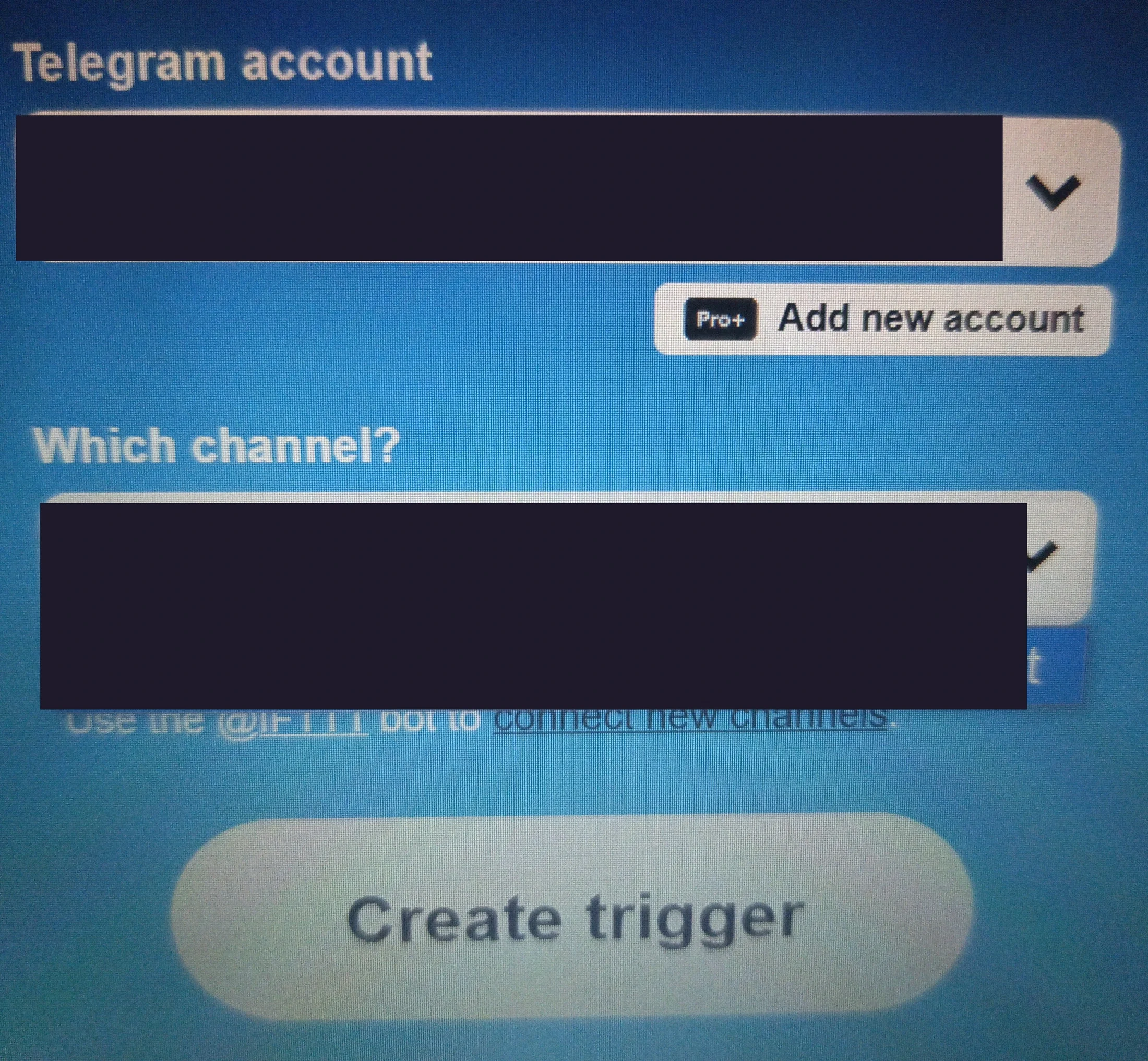
The affiliate publisher already used Zapier to mirror Telegram deals onto a Facebook Page and wanted a lower-cost IFTTT approach. The client reported approximately 100 daily posts as intended workload, not a demonstrated sustained capacity test.
What needed to change.
Text and affiliate URLs sometimes reached Facebook while product images did not. The source also changed between Telegram groups and channels, whose third-party triggers exposed different media fields. A cheap automation without the correct photo and affiliate destination would not meet the publishing need.
The key mapping distinguishes message text, photograph URL, Telegram post link and product affiliate URL; none should be silently substituted for another.
A connected solution.
We configured an IFTTT Telegram-to-Facebook path, tested captions and images, corrected Facebook Page selection and found that a group-to-channel forwarding step gave the available channel-photo trigger more suitable source data. A later May message said the previously working workflow had stopped, so permanent compatibility, maintenance-free operation and actual subscription savings cannot be claimed. Technology stack: Telegram · IFTTT · Facebook Pages · Forwarding bot.
Implementation, step by step.
Existing high-volume workflow
The client reported about 100 posts daily and an existing working Zapier integration.
IFTTT trial
The developer set up and tested a Telegram channel to Facebook Pages Applet.
Text and links
The client confirmed progress publishing product descriptions and links, but wanted to ensure affiliate destinations remained intact.
Image mismatch
Some tests missed product photographs; source events and Facebook action input fields required review.
Group versus channel
The selected IFTTT configuration did not expose the required images from the Telegram group in the same way as channel-photo events.
Forwarding workaround
An intermediate Telegram channel and forwarding bot were proposed to move eligible group content into a usable source.
Bot trials and costs
Several forwarding bots failed or had cost implications, relevant because the client wanted cheaper operation.
Client verification
Later interruption
On May 16 the client said the automation had stopped after working previously; no final repair is documented.
Technical decisions, edge cases and validation
Several forwarding bots failed or introduced fees, undermining the original price motivation. The correct cost comparison has to include IFTTT plus the forwarding service, not just one subscription label. The client accepted April tests but no independent evidence establishes 100 complete image-and-link posts every day or resolution of the later interruption.
What We Delivered.
Telegram-to-Facebook publishing was tested using a group-to-channel forwarding workaround and IFTTT.
The publishing workflow worked in April tests; a later service interruption means ongoing compatibility should be retested.
Technical lessons for comparable projects: Use source event types that expose the required image and caption fields.
Test original affiliate destination and tracking parameters rather than link appearance alone.
Treat a forwarding bot as a new operating dependency with its own limits.
Project Highlights
- The publishing workflow worked in April tests; a later service interruption means ongoing compatibility should be retested.

Frequently Asked Questions.
Why forward from a group to a channel?
The selected IFTTT configuration handled channel-photo data more effectively than the group content.
Did the client truly save money?
The goal was lower cost, but no full comparable billing record is available.
Was 100-post/day capacity confirmed?
No. That figure was client-reported desired volume.
Did the automation run forever?
A May interruption was reported after successful April client tests.
Need a smarter way to share content across platforms?
Tell us about your project and discuss the next steps with Superb Digitals.
Related client work.
 AI Automation
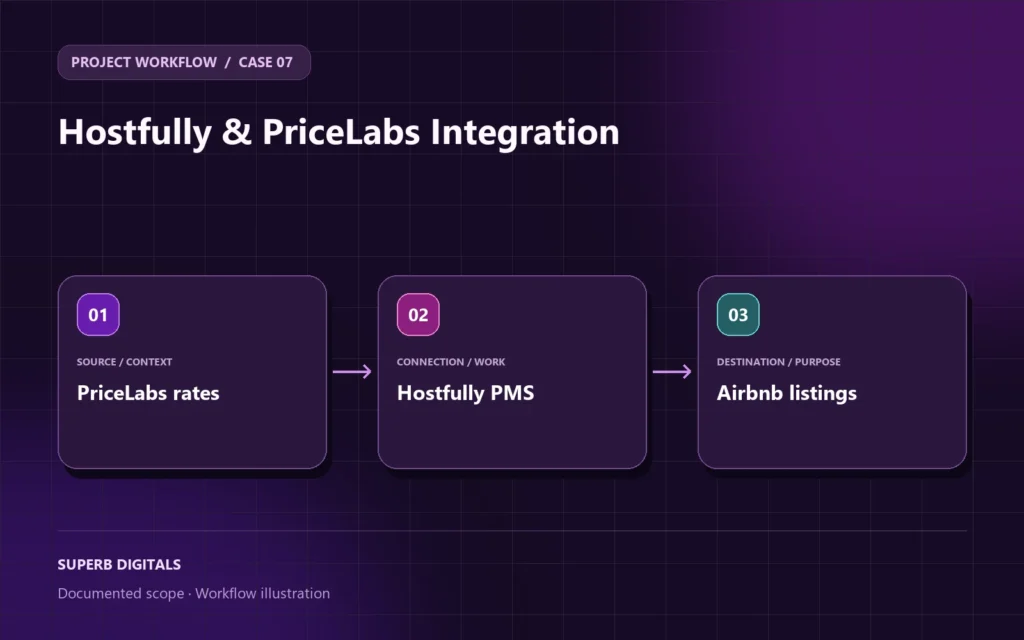
Hostfully & PriceLabs Integration
Two rental listings with different booking windows, connected pricing and practical stay-rule troubleshooting.
 AI Automation
24/7 Weather Monitoring & Smart Alert Automation
A six-phase weather automation project using Tempest, WeatherLink, IFTTT, Make.com and Apps Script for rain and storm alerts.
 AI Automation
Leonidas Labs — AI-Powered Quiz & Automated Report Generation
An AI-powered quiz funnel connecting Jotform, Make.com, OpenAI, Brevo, Stripe and Google Docs for personalized reports.