
Darley Lodges
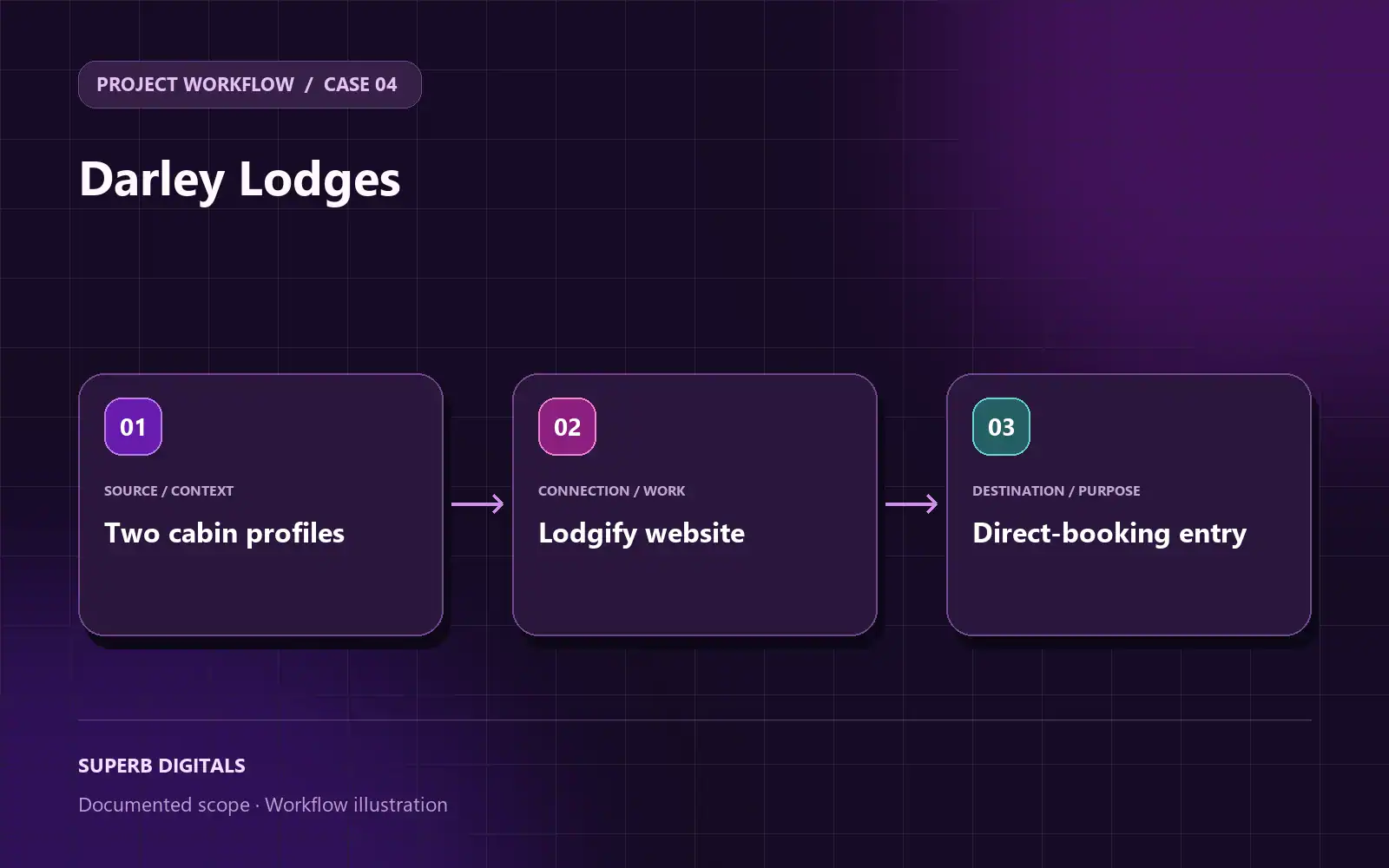
A two-property Lodgify redesign focused on distinct cabin presentation and clear direct-booking navigation.
Project overview.
Creating a Branded Booking Experience for Two Luxury Vacation Rentals in Ohio
Running a vacation rental business requires more than beautiful accommodation. Guests need to find the right property, understand what makes it special and feel confident about taking the next step toward booking.
That was the challenge behind our work with Darley Lodges, a vacation rental business offering two luxury cabin retreats near Logan and the Hocking Hills region of Ohio, United States.
The business already had accommodation listings on Airbnb and an existing Lodgify website, but the owner wanted a more professional online presence that would better represent both properties and support direct reservations.
The project also came with an important consideration: the business did not have an established logo or website colour palette.
Superb Digitals was hired to redesign the Lodgify website, improve how the accommodation was presented, create a complimentary logo, and help the owner prepare the booking experience and related integrations.
Client: Darley Lodges
Location: Logan / Hocking Hills area, Ohio, United States
Industry: Short-Term Rentals, Vacation Rentals and Hospitality
Platform: Lodgify
Property portfolio: Two luxury cabins
Services: Lodgify Website Redesign, Brand Identity, Property Presentation, Responsive Layout Design, SEO Foundations and Booking-System Configuration Support
Project started: April 8, 2026
Delivered: April 12, 2026
Website: https://darleylodges.com/
What needed to change.
Turning an Existing Lodgify Website Into a Professional Brand Experience
When the Darley Lodges owner contacted us, the request was straightforward: improve an existing Lodgify website for two properties and make the booking setup easier to manage.
However, several business and technical requirements needed to be addressed.
1. The Existing Website Needed a Redesign
The owner already had a website and had created parts of the property’s online presentation.
Rather than starting with a completely new platform, the objective was to improve what was already available.
The website needed a stronger homepage, better imagery, consistent sections and an overall presentation that reflected the quality of the accommodation.
For vacation rental businesses, this matters because guests often compare multiple properties before choosing where to stay.
A website should communicate the property’s value clearly, not leave visitors to work out important details for themselves.
2. Two Properties Needed One Consistent Online Identity
Darley Lodges manages two accommodation options:
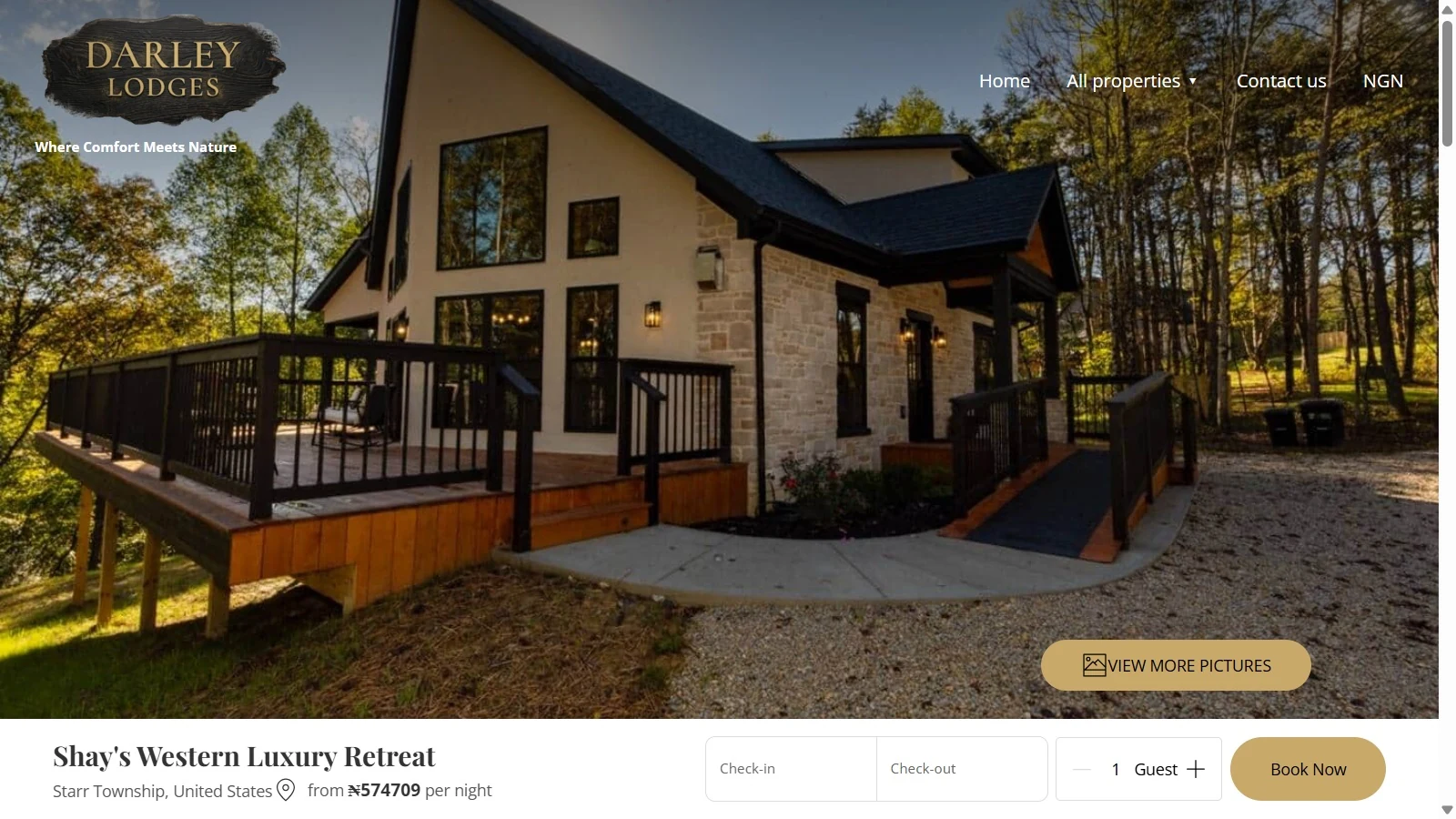
Shay’s Western Luxury Retreat
A spacious cabin with Western-inspired character, private outdoor relaxation areas and amenities for families and groups.
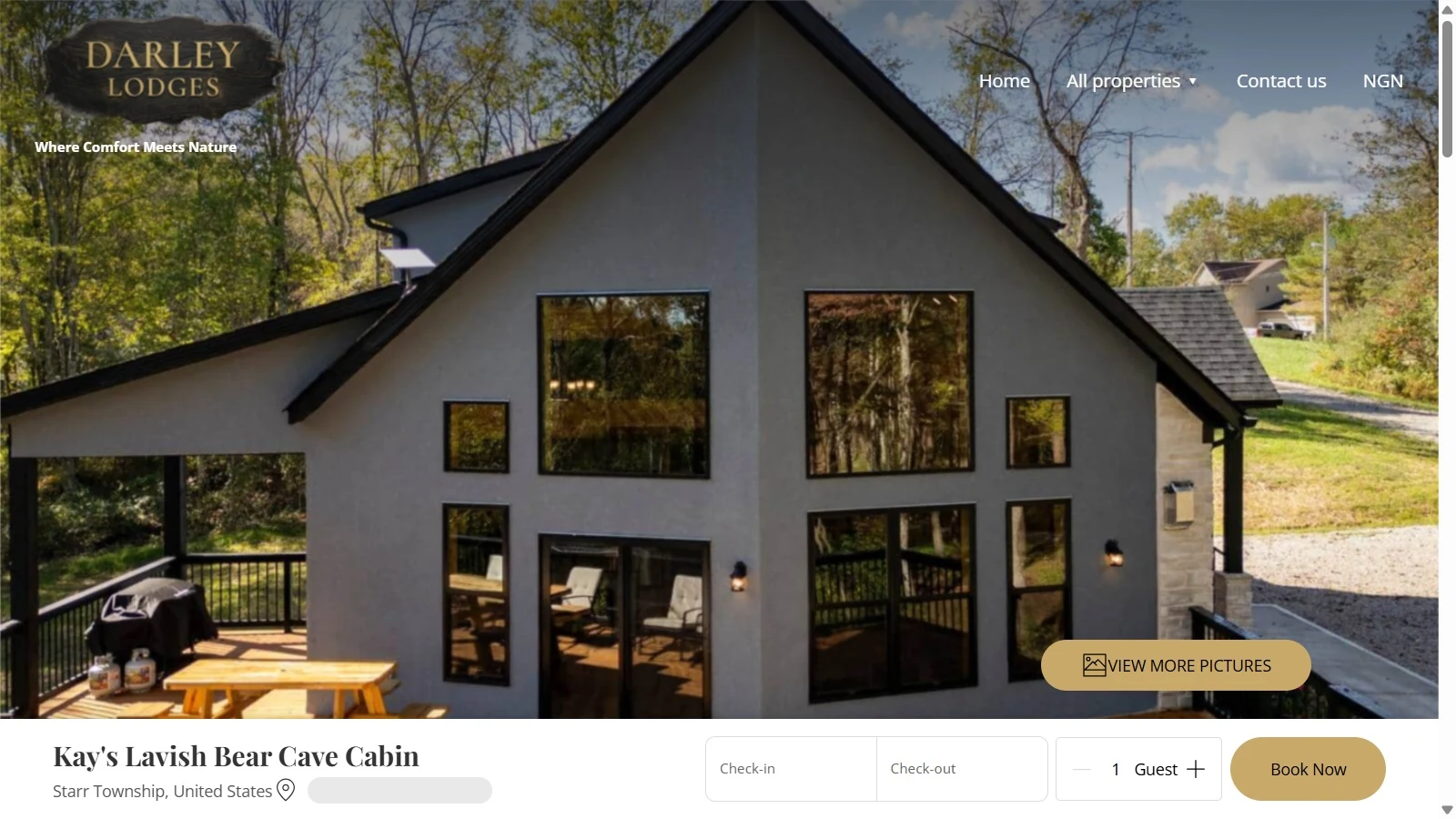
Kay’s Lavish Bear Cave Cabin
A woodland retreat with a distinctive Bear Cave theme, entertainment amenities and comfortable accommodation for group stays.
Both properties needed to belong to one recognizable brand while retaining their individual identities.
The website therefore had to balance consistent design with property-specific information.
3. The Business Needed a Brand Identity
At the beginning of the project, the owner confirmed that no logo or brand colours had been established.
This created an opportunity to develop a more coherent visual direction.
Instead of applying random styling throughout the website, we needed a consistent identity that could support the homepage, accommodation presentation and wider customer experience.
4. Direct Booking Was a Priority
The owner wanted visitors to have the option of booking through the property’s own website.
This required attention to Lodgify’s reservation functionality, including property selection, availability search and payment settings.
The booking experience needed to work alongside the business’s existing accommodation channels.
5. Airbnb and Vrbo Connections Required Technical Coordination
The owner also wanted to connect the Lodgify account with other booking platforms, including Airbnb and Vrbo.
This raised important operational questions.
How would bookings be coordinated across different channels? Which account permissions were necessary? What settings could the website developer configure, and which actions required the primary account owner’s authorization?
These questions became part of the implementation process.
A connected solution.
Using Lodgify’s Existing Capabilities Instead of Overcomplicating the Website
One of the first decisions was whether to build the new website using WordPress or continue with Lodgify.
We discussed both approaches.
WordPress offered more opportunities for custom development and layout flexibility, but it would also introduce a separate website platform and require a connection to Lodgify’s booking tools.
The client preferred simplicity.
Because the business already used Lodgify, we agreed to build within its existing website environment.
This reduced the need to introduce another content management system and kept the public website closely associated with the client’s chosen vacation rental platform.
The decision illustrates an important part of our development process: choosing technology based on the client’s actual needs rather than recommending a more complicated setup simply because it offers more customization.
Implementation, step by step.
The Website Development Process
Stage 1: Reviewing the Existing Property Website
We began by reviewing the client’s existing Lodgify website and Airbnb property links.
The owner shared the two accommodation listings and an example of the current property page.
We discussed the desired improvements and clarified that the project was a website revamp rather than an unrelated new build.
This allowed us to focus on the most relevant areas: presentation, booking access, brand consistency and usability.
Stage 2: Building the Homepage Around the Guest Experience
The homepage became the central part of the redesign.
A visitor arriving on Darley Lodges needs to understand what the business offers, why the cabins are distinctive and how to choose between them.
We organized the website around those decisions.
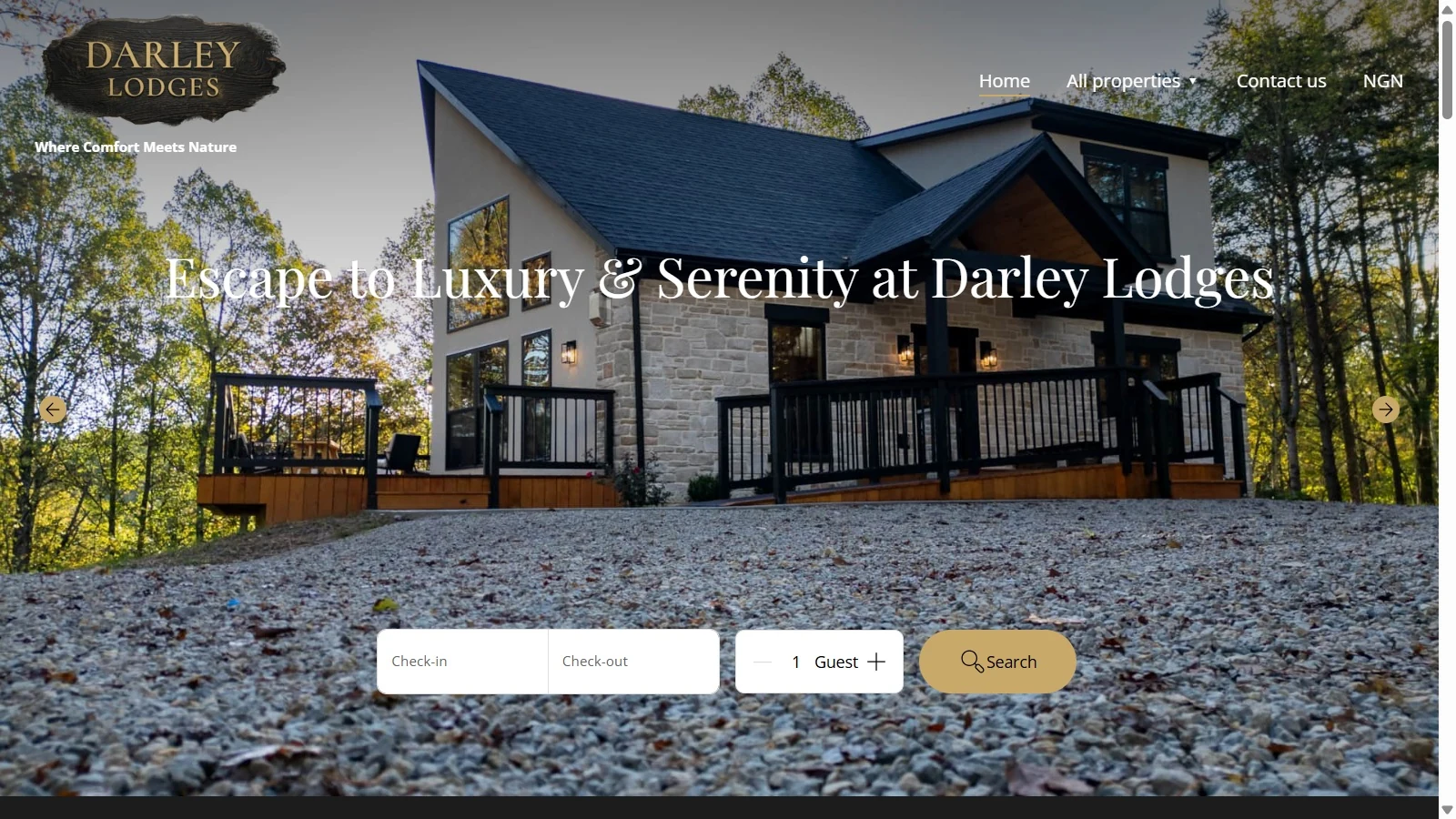
The homepage presents the luxury cabin experience, introduces the two properties and provides visible booking actions.
It also includes supporting sections about the accommodation, photography and guest experiences.
This approach helps visitors move naturally from initial interest to property exploration.
A well-structured homepage should not require guests to search endlessly for the accommodation or the booking option.
Stage 3: Introducing a New Logo and Visual Direction
Because the client had not supplied an established logo, we developed a complimentary brand asset during the project.
The logo was intended to give Darley Lodges a recognizable identity beyond its property listing photographs.
We also worked on the overall visual presentation, including the balance between imagery, text and website sections.
The goal was to establish a more cohesive appearance suitable for a premium cabin rental business.
The logo was later shared with the client again following a request about favicon assets, providing additional evidence of the brand design work.
Stage 4: Presenting Both Cabins Clearly
Each rental property needed to be discoverable from the homepage.
The website presents both cabins as separate accommodation options within the Darley Lodges collection.
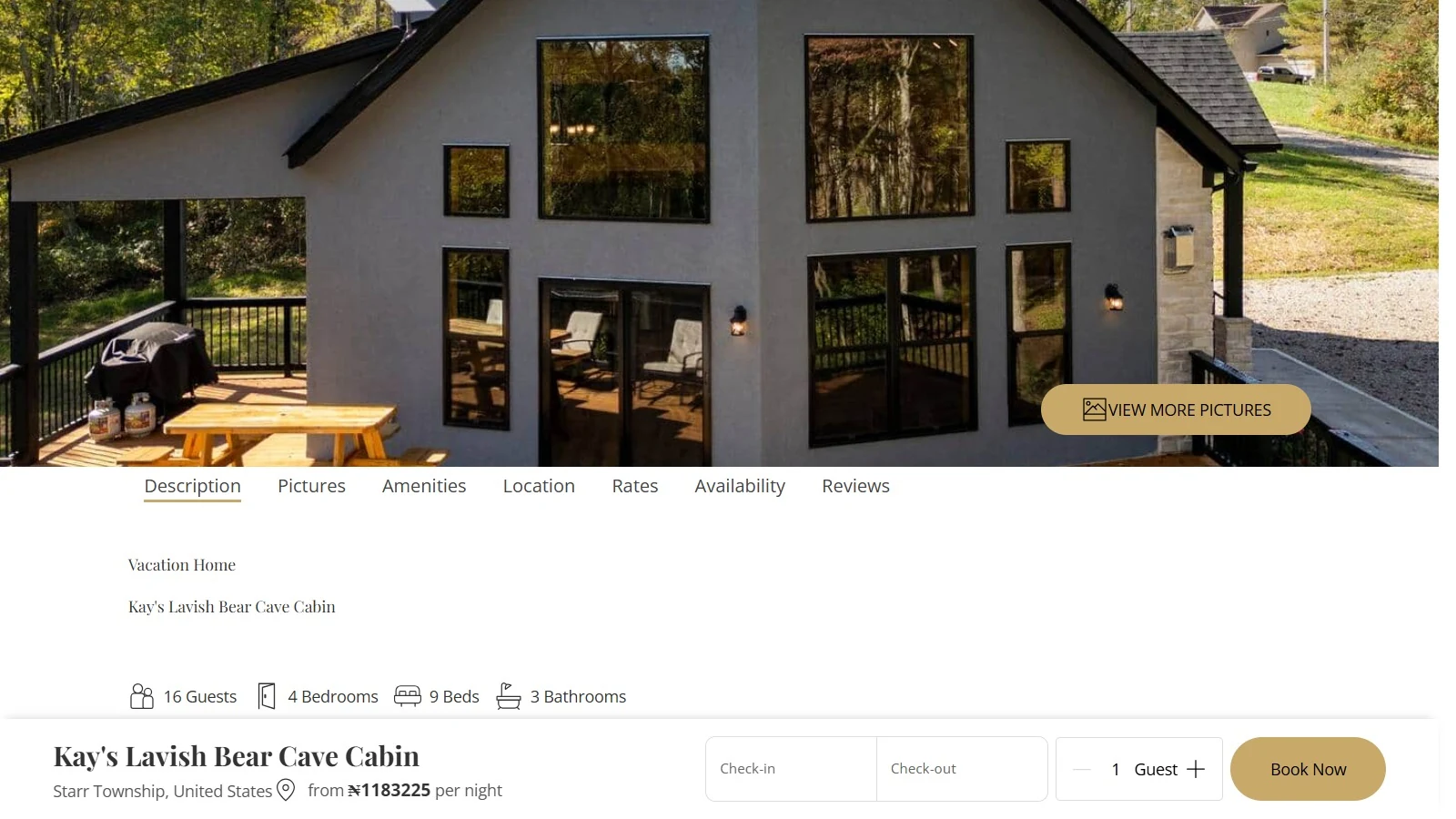
The property’s individual pages provide essential guest information, including accommodation capacity, bedrooms, amenities, photographs, house rules, payment policies and availability.
The current public website identifies both cabins as accommodating up to 16 guests, with four bedrooms and three bathrooms each.
This level of information is particularly useful for guests planning family gatherings or group trips.
Instead of navigating back and forth between different marketplace listings, visitors can explore the accommodation within the same branded website.
Stage 5: Improving Homepage Photography and Visual Content
Photography plays a central role in vacation rental marketing.
Guests want to understand the accommodation before booking, particularly when planning group stays.
During the project, the owner supplied additional property imagery and asked us to select appropriate photographs for the website.
We reviewed the assets and updated the homepage images based on the client’s feedback.
This helped bring the visual presentation closer to the intended guest experience.
The work was not simply about adding more pictures. It involved choosing imagery that supported the property’s presentation and arranging it within a clearer page structure.
Stage 6: Adding Guest Reviews and Trust Signals
Reviews provide visitors with an opportunity to learn from previous guest experiences.
We worked on the homepage review section during development.
The live website presents feedback from guests describing their experiences with the cabins, including cleanliness, amenities, host responsiveness and suitability for group stays.
These details help answer practical questions that promotional copy alone may not address.
For accommodation businesses, authentic guest feedback can be an important part of building confidence.
It gives prospective visitors another perspective on the property and supports the decision-making process.
Stage 7: Developing the Direct Booking Experience
The website needed to guide guests from property exploration toward the reservation process.
We worked within Lodgify’s website and booking environment to support that journey.
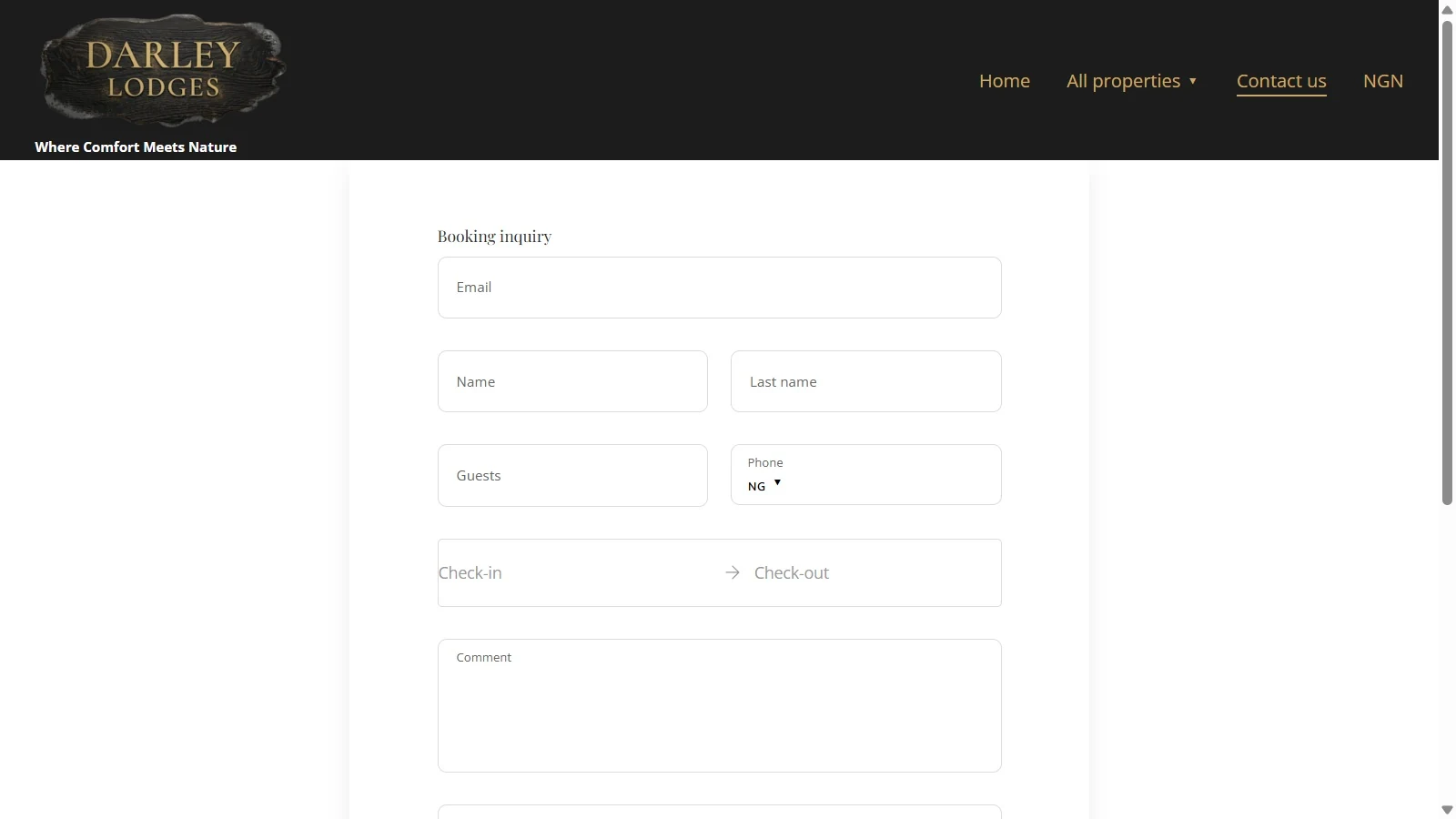
The current website includes check-in and check-out selection, guest selection, property search and booking actions connected to Lodgify.
The individual property pages also provide availability and reservation options.
This gives visitors a direct route into the property’s booking environment rather than relying exclusively on an external marketplace listing.
However, displaying booking functionality is different from independently verifying every operational payment and reservation setting.
Those settings depend on the client’s Lodgify account configuration and connected payment services.
Stage 8: Working Through Platform Access and Permissions
One of the most important technical considerations involved access permissions.
The owner had invited us into the Lodgify account, but certain account-level actions still required additional authorization.
These included sensitive payment and external channel settings.
We discussed the difference between delegated website administration and actions that must be completed by the primary account owner.
This was particularly relevant to connecting payment services and external booking channels.
Our approach was to coordinate the remaining configuration requirements with the owner rather than attempting to bypass the platform’s account protections.
This distinction matters because responsible website development includes respecting access boundaries and the security of financial and reservation systems.
Stage 9: Planning the Custom Domain and Publication
The website was initially made available through a Lodgify preview address while development continued.
Publication to the client’s custom domain depended partly on Lodgify plan requirements and owner-controlled settings.
We communicated these dependencies and continued with the design and content work that could be completed independently.
The project was subsequently delivered, and the Darley Lodges website is publicly accessible through its branded domain.
This illustrates why website launches sometimes require coordination between the developer, the software provider and the business owner.
A finished page design is only one part of the launch process.
Stage 10: Foundational SEO Work
Search visibility was also considered during the website redesign.
We communicated that the design and initial SEO work had been completed as the project progressed.
The live website uses property names, location information, accommodation descriptions and individual property pages to explain the business’s offering.
These provide useful foundations for location-focused search queries and accommodation discovery.
For example, visitors researching large cabin rentals around Hocking Hills may need information about guest capacity, amenities, location and nearby attractions.
Clearly organized property content can help serve that research intent.
The project included foundational SEO work, but the available records do not establish a completed independent technical SEO audit or subsequent improvements in Google rankings.
Any long-term SEO performance would need to be measured using relevant search and analytics tools.
What We Delivered.
The Final Website Experience
The Darley Lodges website brings together several elements of the hospitality booking journey.
A branded homepage
A more consistent introduction to the business, its accommodation and the experience it offers.
Two individual property listings
Dedicated pages for Shay’s Western Luxury Retreat and Kay’s Lavish Bear Cave Cabin.
Property photography and accommodation information
Visual content and practical details that help guests understand the cabins.
Guest review sections
Existing guest feedback presented as supporting information.
Accommodation search
A website interface for selecting travel dates and the number of guests.
Lodgify booking links
Reservation actions connected to the Lodgify booking environment.
A new logo
A complimentary brand identity asset developed as part of the project.
Responsive website design
Layout work intended to make the website more comfortable to browse across desktop and mobile devices.
Search-focused content foundations
Property-specific information and descriptive website sections that support discoverability.
Website Delivery and Client Feedback
The website was delivered on April 12, 2026.
In the follow-up conversation, the client stated:
"Yes, I am happy with everything."
This was a particularly useful outcome because the project involved more than website styling.
We had worked with an existing accommodation platform, supplied branding, refined imagery, coordinated technical access and responded to additional client questions after delivery.
The owner subsequently returned with a request relating to the website’s favicon and logo assets.
The project demonstrates our ability to work within established booking software while helping smaller hospitality businesses improve their independent web presence.
Verified outcomes
- The website redesign was delivered.
- A logo asset was created and shared.
- Two accommodation options were presented through the Lodgify website.
- Homepage imagery and the guest review section were updated.
- The order was completed.
- The client confirmed satisfaction with the delivered website.
- The branded website is publicly accessible.
Results not independently measured
The available records do not establish increased bookings, additional revenue, lower marketplace commissions or higher Google search rankings.
Complete Airbnb/Vrbo channel synchronization and live payment processing were discussed but cannot be independently verified from the archived delivery evidence alone.
What This Project Demonstrates About Superb Digitals
Experience With Lodgify Website Development
The project involved working directly in Lodgify’s website environment rather than building a disconnected third-party page.
This experience is relevant to owners who want to improve an existing Lodgify site without moving to a new platform.
An Understanding of Vacation Rental Operations
The client needed more than a promotional website.
Property presentation, reservations, payment settings, external listing connections and account permissions all needed consideration.
We approached the website as part of the business’s operating system.
Practical Technology Recommendations
We considered WordPress but ultimately proceeded with Lodgify because the client preferred a simpler setup using the tools already available.
The right solution is not always the one with the most features. It is the one that fits the business’s needs and resources.
Brand Design and Website Development Together
The client began without a formal logo or established colour palette.
Providing a brand asset alongside the website helped create a more consistent public identity.
Client Communication and Post-Delivery Support
The project involved ongoing feedback, review of visual assets and coordination around account access.
After delivery, the client confirmed satisfaction and later returned for help with a branding asset.
This illustrates the importance of communication and continued support in client website projects.
Project visuals.
 View image


Frequently Asked Questions.
Can you redesign an existing Lodgify website?
Yes. An existing Lodgify website can be improved through supported layout settings, content changes, branding, imagery and booking-related configuration. The extent of customization depends on the available Lodgify tools and the client’s subscription.
Should I use Lodgify or WordPress for a vacation rental website?
Both can be suitable. Lodgify offers a website builder connected to its vacation rental management tools, which may simplify operations. WordPress offers greater customization and flexibility but may require additional integrations. The best choice depends on the website’s complexity, budget and booking requirements.
Can a Lodgify website handle more than one vacation rental?
Yes. Lodgify supports multi-property website experiences, subject to the relevant account configuration. Visitors can browse different accommodation options and access property-specific reservation information.
Can Lodgify connect to Airbnb and Vrbo?
Lodgify offers channel management capabilities for supported booking platforms. The available connections, required permissions and synchronization behaviour depend on current platform support and the account’s configuration. Each connected channel should be tested before the owner relies on it for reservation management.
Can a Lodgify website accept direct bookings?
Yes. Lodgify provides direct booking functionality. Accepting live payments also requires the appropriate payment provider, account approval and configuration.
Do I need a logo before developing my vacation rental website?
Not necessarily. A website can begin with a clear brand direction, and a logo can be developed as part of the project. Consistent branding helps visitors recognize the business across its website and other marketing channels.
Can you improve the SEO of a Lodgify website?
Yes. Useful improvements can include descriptive titles, headings, property information, location-relevant content, image optimization and internal links. More advanced technical changes depend on what Lodgify allows. Search performance should be monitored rather than assumed.
Does a direct booking website guarantee more reservations?
No. A direct booking website gives guests another way to interact with the property, but results depend on factors such as demand, pricing, traffic sources, guest trust and the booking experience.
Need a Professional Lodgify Website for Your Vacation Rental Business?
Your guests should be able to explore your properties, understand what makes them special and find a clear path toward booking.
Whether you’re starting with one rental, redesigning an existing Lodgify website or managing multiple short-term rental properties, Superb Digitals can help you build a more professional digital experience.
We work with vacation rental website design, booking-platform configuration, WordPress development, SEO and related business automation.
Let’s discuss your vacation rental website project.
Explore our web development services or contact Superb Digitals to discuss your existing website, booking platform and business goals.
Superb Digitals — Web Development, CRM and AI Automation Solutions
Planning a better hospitality website or booking workflow?
Tell us about your project and discuss the next steps with Superb Digitals.
Related client work.
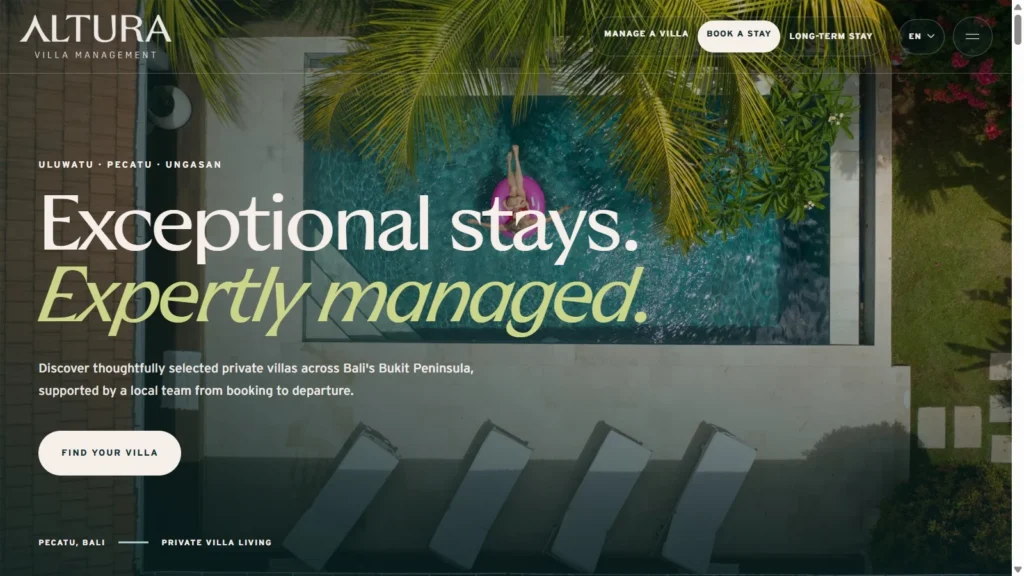 Web Development
Altura Villa Management
A branded Hostaway Pro guest experience aligned with a separate Wix villa-management website.
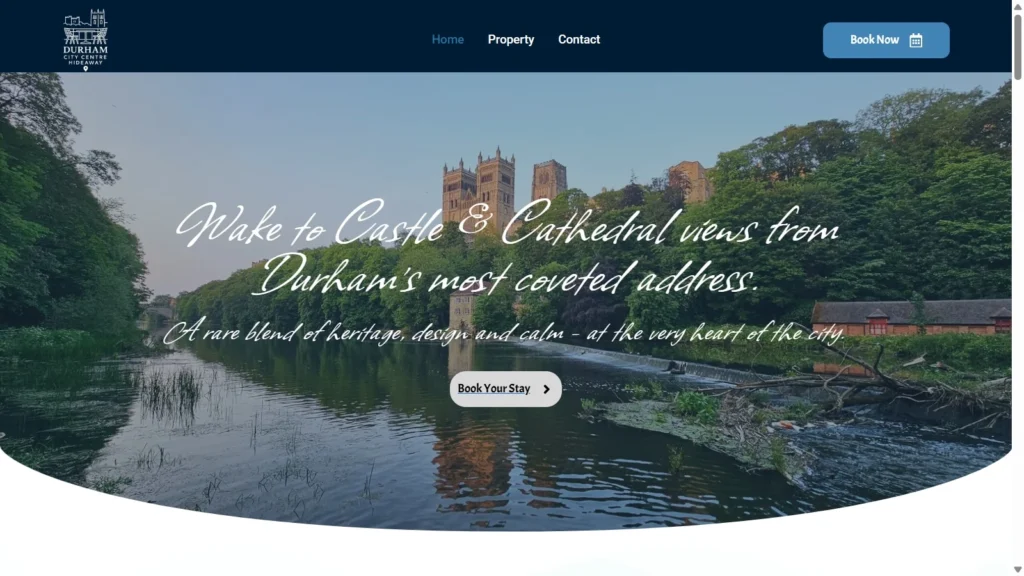 Web Development
Durham City Centre Hideaway
A single-property website connecting accommodation storytelling, virtual-tour planning and a clear booking journey.
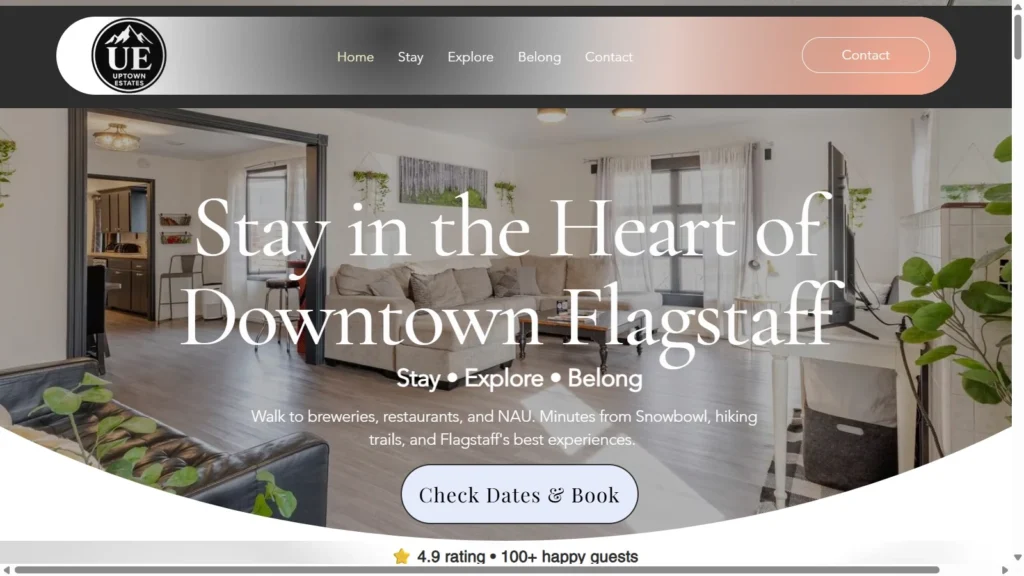 Web Development
Uptown Estates
Three rental choices, four-season Flagstaff content and a clear transition from Wix to Guesty reservations.