

Medical Courier WordPress Website Development for Perfectly Polished LLC
Completing and refining an existing WordPress website for an Indianapolis healthcare logistics business, with branded service content, delivery-request and partnership pathways, hosting troubleshooting, SSL configuration and form-email integration work.
Project overview.
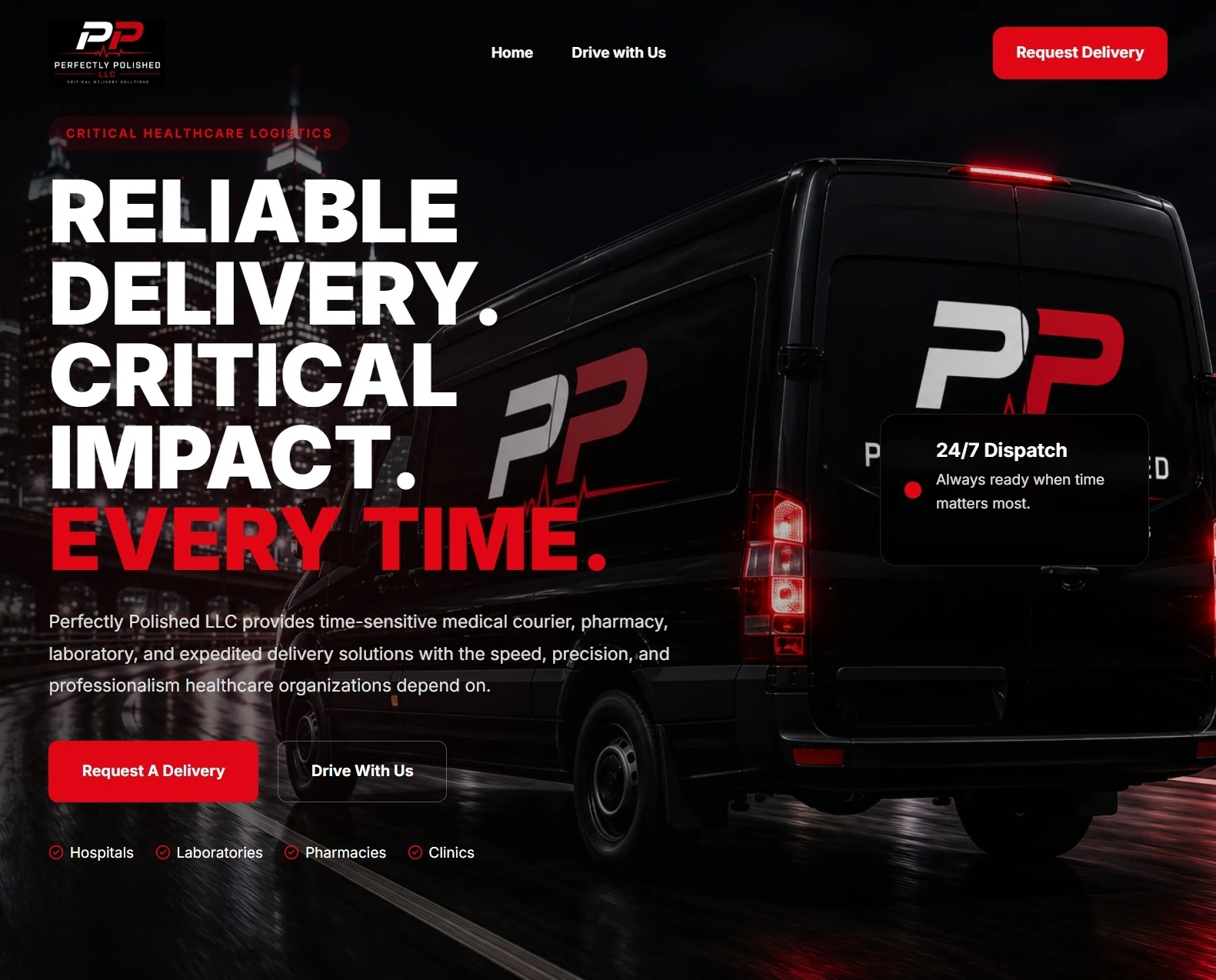
Building a Credible Online Presence for a Medical Courier Business
For a medical courier company, a website is more than an online business card.
It needs to explain what the company transports, which organizations it serves and how a potential customer can begin a delivery or partnership enquiry.
Healthcare logistics also involves a level of trust that differs from many ordinary local delivery services.
Hospitals, laboratories, pharmacies and clinics may need dependable transportation for time-sensitive materials. Before discussing a contract, they need a clear understanding of the courier company’s services, operating model and contact process.
What needed to change.
The Starting Point: An Unfinished WordPress Installation
The client did not need a completely new website platform.
WordPress was already installed, and an initial website had been started.
That changed the implementation approach.
Before making design changes, we needed to examine the existing installation and identify what was missing.
Our early review identified work involving the website’s security configuration, theme presentation, content structure, navigation, forms, mobile experience and general technical readiness.
A connected solution.
Understanding the Business and Its Website Audiences
Healthcare organizations seeking courier services
The first audience consisted of healthcare and business customers requiring transportation support.
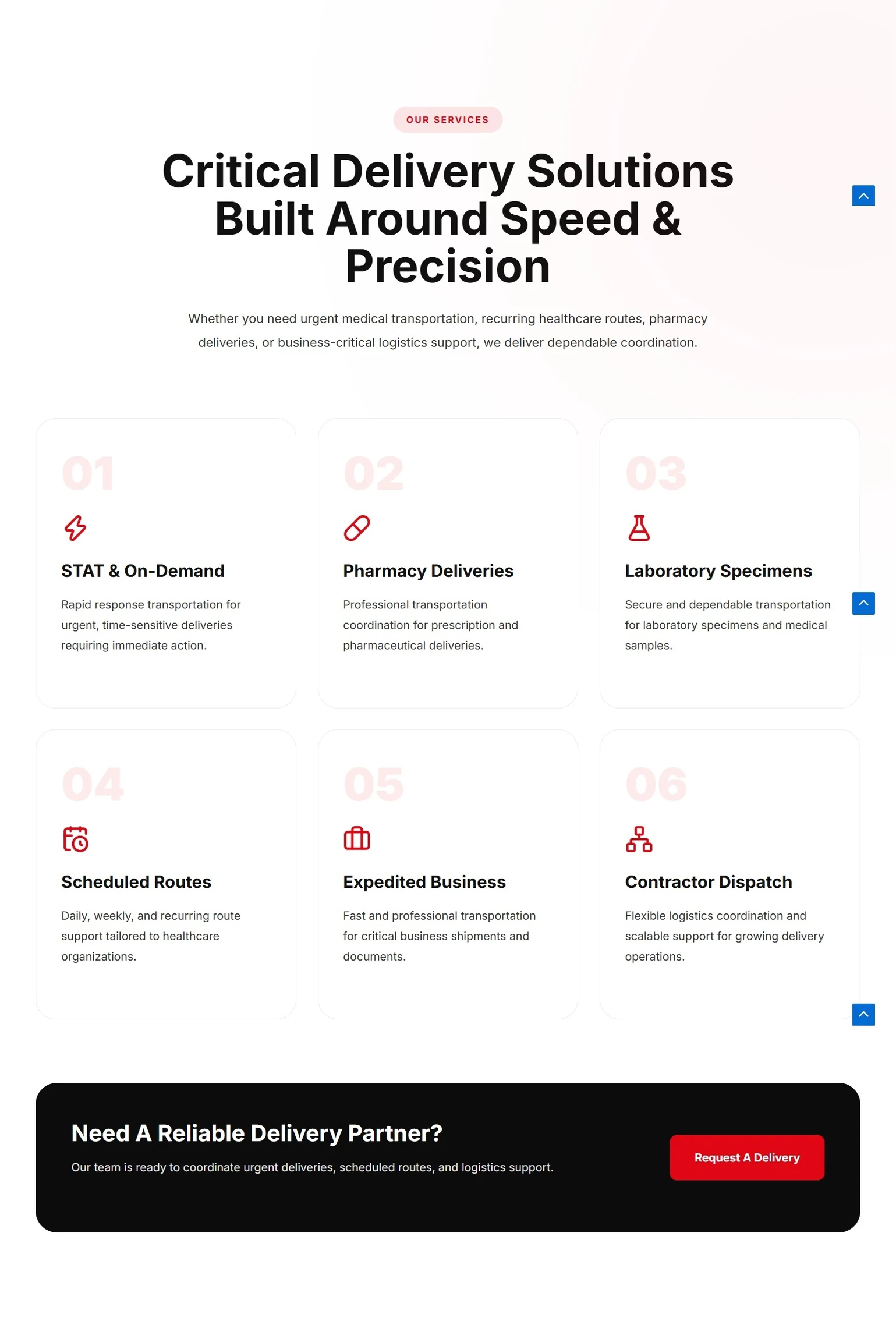
The client identified potential customers such as:
- Hospitals, clinics and healthcare providers.
- Medical laboratories and diagnostic facilities.
- Pharmacies and pharmaceutical businesses.
- Other organizations requiring scheduled or time-sensitive deliveries.
These users needed an understandable description of the company’s services and a practical way to request information.
The website therefore needed to answer common commercial questions:
Implementation, step by step.
Implementation Journey: From Existing Website to Client Review
Phase 1 — June 27, 2026: Assessing the existing website
The client approached us after beginning the WordPress project independently.
They explained that they operated a medical courier and dispatch business and needed help completing the website quickly.
We reviewed the existing web presence and identified areas that needed attention.
These included the site’s security presentation, layout, navigation, content organization and enquiry process.
The assessment also helped establish that the site needed both visual work and technical configuration.
A website can have WordPress installed and still be unsuitable for public launch.
The relevant question was not whether a WordPress dashboard existed, but whether visitors could use the site to understand the business and submit meaningful enquiries.
Phase 2 — Narrowing and agreeing the deliverables
We discussed the larger website requirements and proposed a comprehensive multipage package.
The client needed a more affordable option and asked for clarity about what would be included.
We then agreed on the smaller landing-page package.
The accepted scope included one primary page, a form page and the necessary supporting work defined in the order.
The client also wanted the structure to remain suitable for later expansion.
That influenced the content plan.
The immediate goal was not to create every possible page for the company, but to establish a coherent branded foundation.
Phase 3 — Preparing the content and visual direction
The client wanted to approve the messaging and visual approach before significant development continued.
We prepared a content draft and shared it for review.
The client approved the initial direction and requested an explanation of how the colours, images, buttons and content would work together.
We proposed visuals reflecting healthcare transportation and logistics, including courier vehicles, dispatch activity and relevant medical-business environments.
The approved direction used the client’s logo and a cleaner colour balance.
The site was intended to convey professionalism without becoming overly dark or visually cluttered.
Phase 4 — Organizing the conversion actions
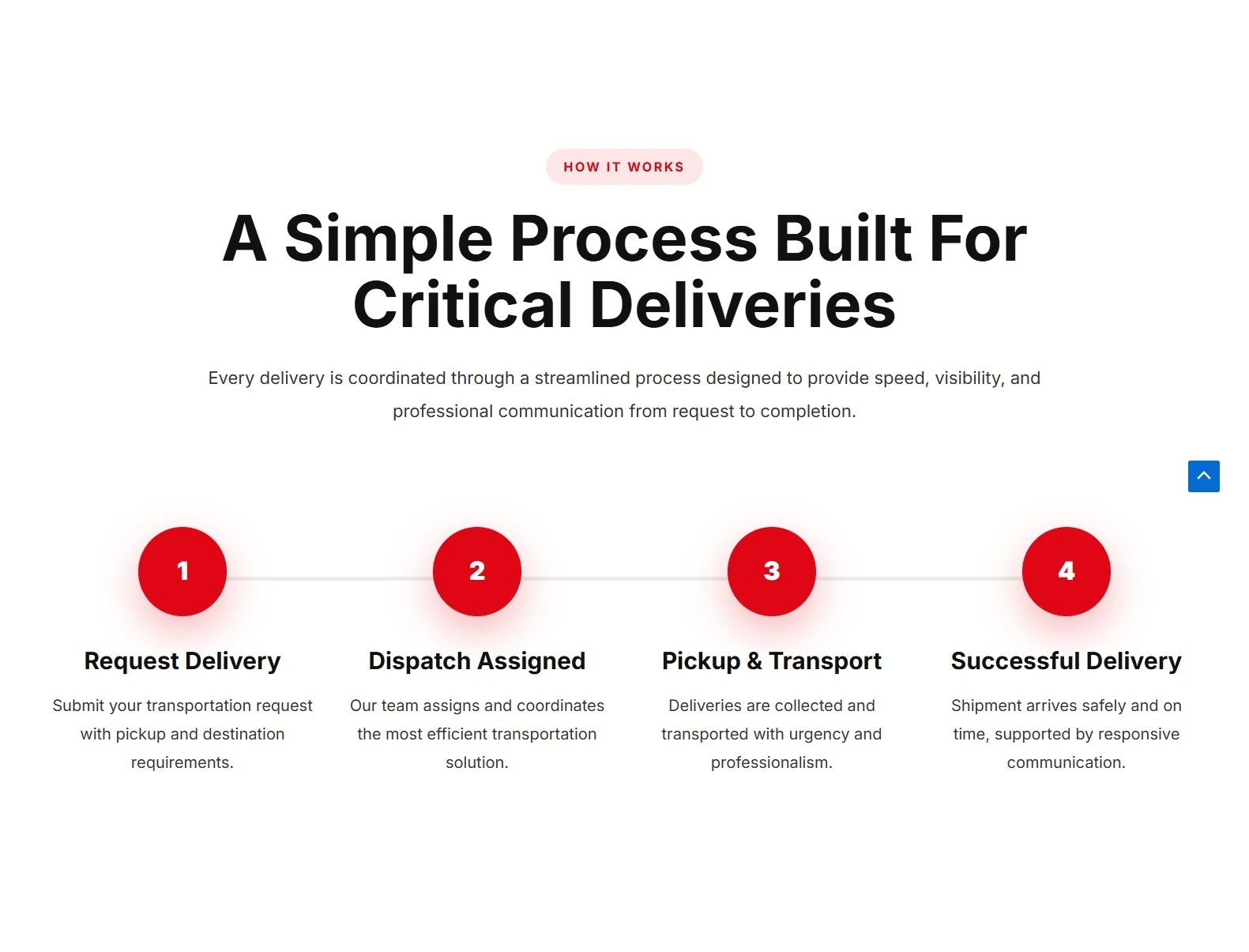
The primary website actions included requesting a delivery or quote and exploring a business partnership.
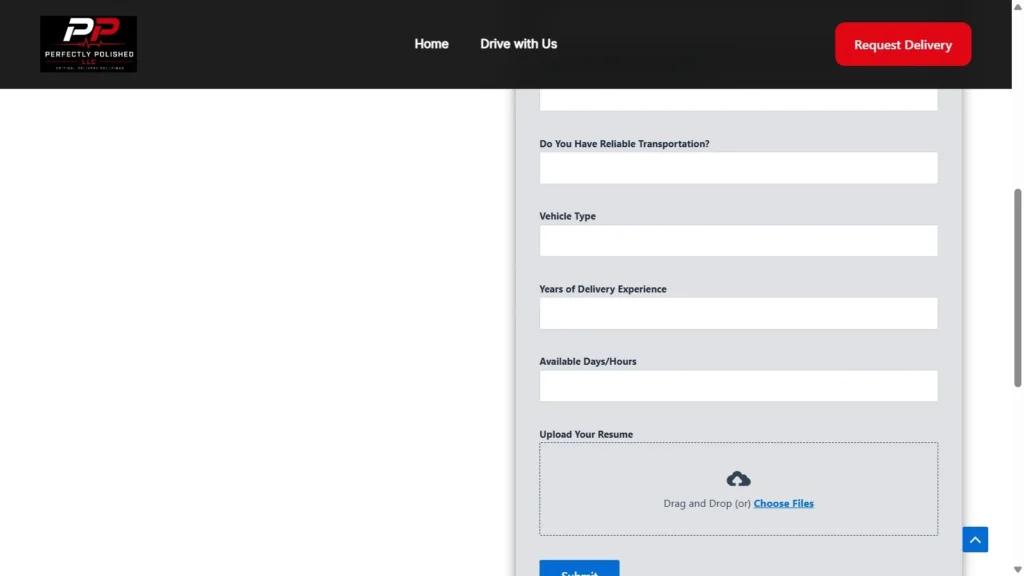
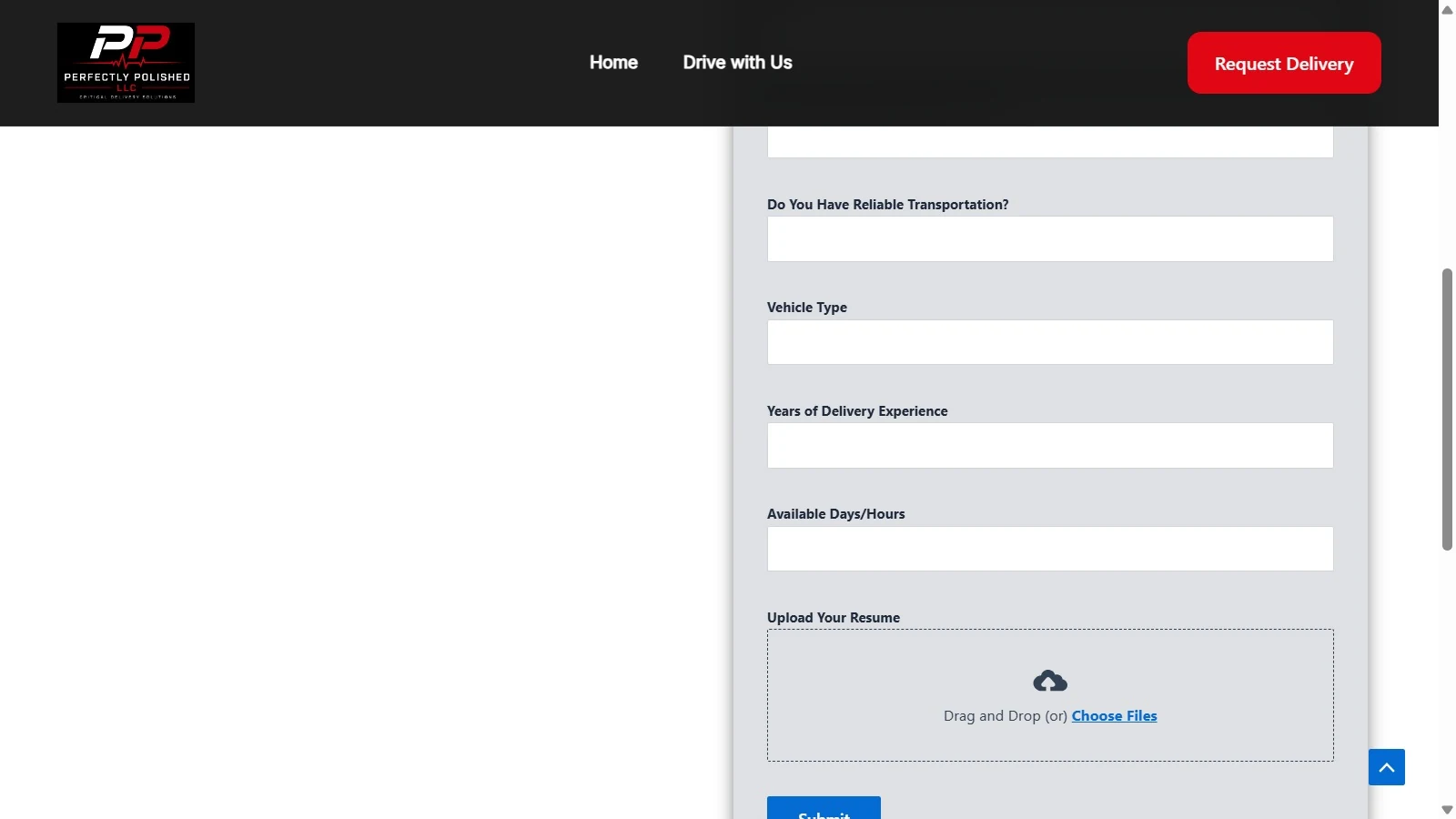
The Per Polished application collects details from prospective delivery drivers and logistics partners. 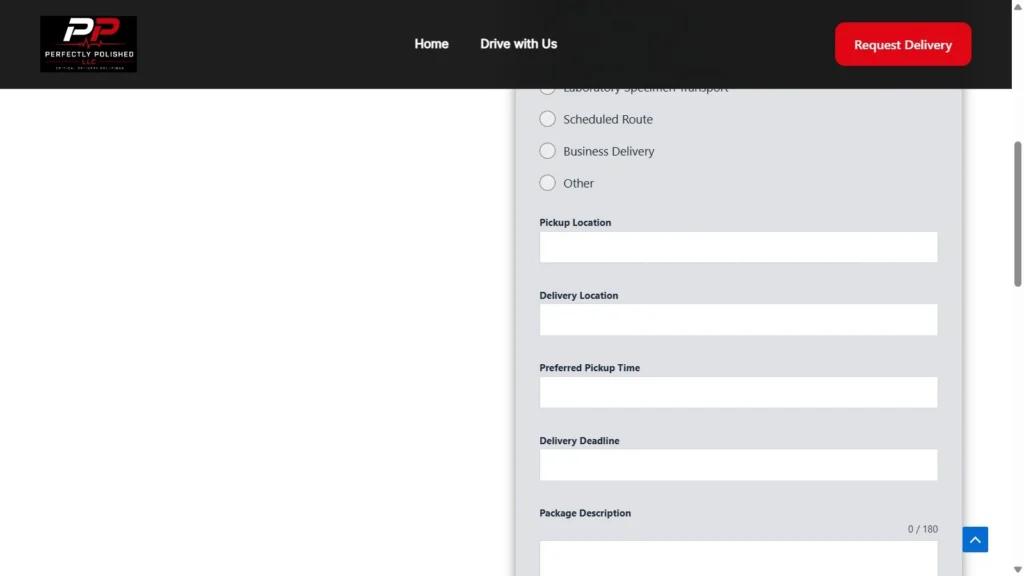
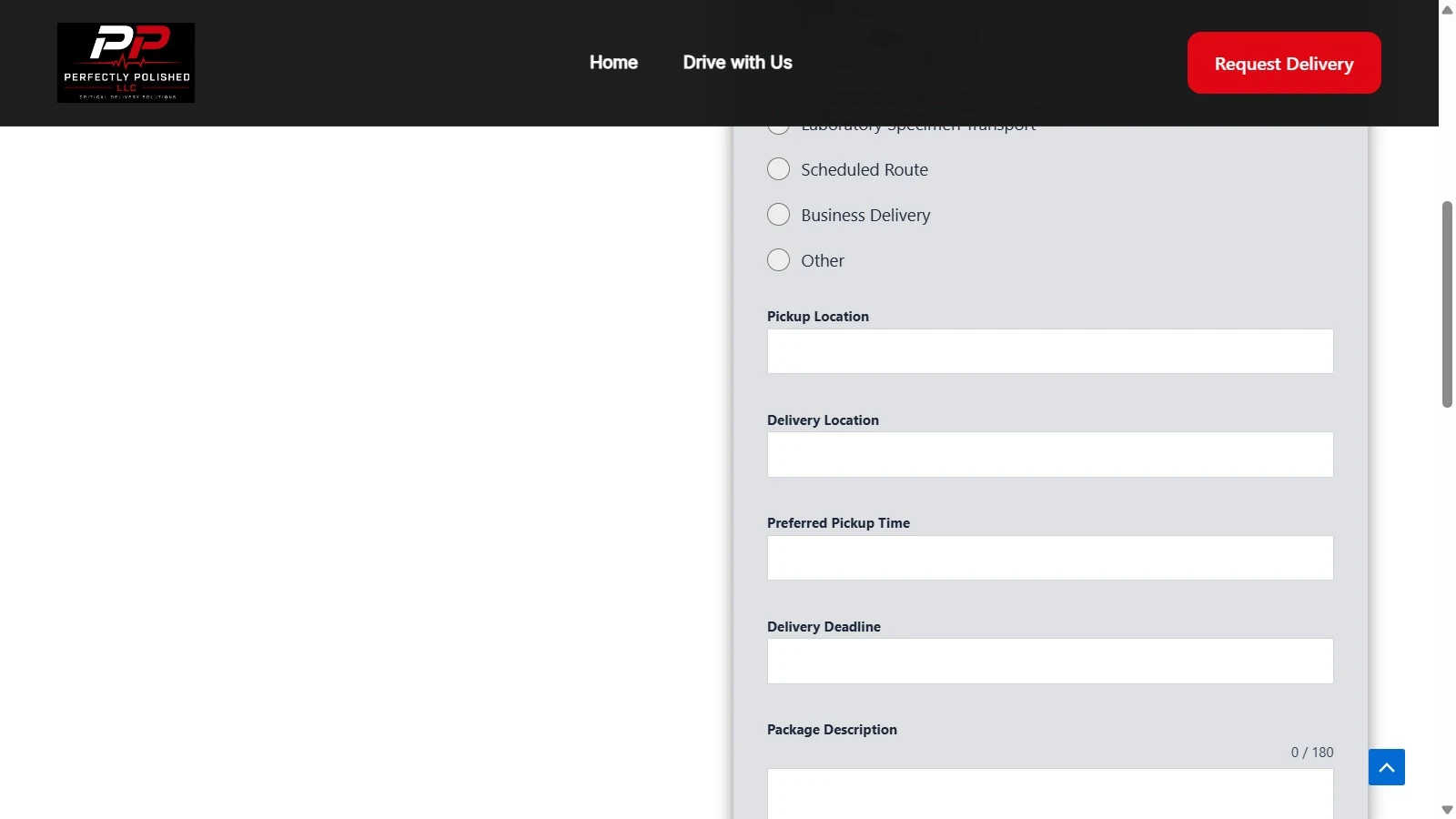
The Per Polished delivery request form collects the information needed to scope a courier delivery. These actions mattered more than decorative navigation.
A hospital administrator or pharmacy representative needed a clear path toward explaining their transportation requirements.
A prospective logistics partner needed a way to begin a different business conversation.
The client initially mentioned accepting payments online, but then clarified that they meant a Request a Quote action rather than a payment checkout.
That prevented an unnecessary e-commerce implementation from becoming part of the project.
It also reinforced the importance of confirming the business meaning of each call to action before building the destination.
Phase 5 — Working within WordPress
We began developing the website inside the existing WordPress environment.
The task involved modifying a partially configured installation rather than deploying a new site from scratch.
We worked on page structure, content presentation and the elements needed for the public-facing experience.
The existing installation also created technical dependencies.
The site had its own plugins, editor state and hosting configuration.
Changes needed to be made without assuming that every pre-existing component was functioning correctly.
Phase 6 — Resolving an editor interruption
During development, the WordPress editor became difficult to use.
The editor window remained stuck on a loading spinner, preventing normal editing.
We investigated the problem and reported that deactivating selected plugins allowed us to continue working.
This was a practical troubleshooting intervention.
It helped restore editing access so the remaining website changes could proceed.
However, the surviving record does not identify a complete plugin-by-plugin root-cause analysis.
Nor does it independently establish that every temporarily disabled plugin was subsequently re-enabled and tested.
The documented technical contribution was restoring the ability to continue the site-editing work through plugin isolation.
Phase 7 — Accessing Namecheap and EasyWP for SSL configuration
The website’s domain and hosting arrangement involved Namecheap and EasyWP.
The client initially shared access to the WordPress editor.
However, WordPress administration access was not sufficient for every hosting-related task.
We needed access to the relevant domain and hosting controls to investigate the SSL configuration.
This caused some confusion during the handoff because the client distinguished between WordPress, Namecheap and EasyWP access.
We clarified why the additional hosting access was required.
The objective was to address the site’s security-warning condition and enable HTTPS access.
We investigated the available certificate options, including whether a free option could be used rather than purchasing a more expensive certificate.
On July 1, we reported that SSL was reflecting on the website.
That is documented developer feedback.
It should not be confused with a current independent test of the certificate’s validity, renewal status or HTTPS behavior across every website URL.
Phase 8 — Sharing the public pages for review
On July 1, we shared public URLs for the client to review.
These included the homepage, delivery-request page and partnership page.
The client was able to inspect the website and provide feedback.
This established an important milestone: the work had progressed beyond a private content outline into actual web pages that the client could review.
It also surfaced issues that would have been difficult to resolve through a design brief alone.
The client questioned parts of the navigation, the relationship between partnership and driver recruitment, and the behavior of the enquiry form.
These observations helped identify which aspects of the website still needed clarification or correction.
Phase 9 — Clarifying partner enquiries and driver recruitment
The client initially described partnering and driver recruitment in overlapping terms.
During the review, they clarified that business partnerships and driver applications should serve different purposes.
Partner With Us was intended for businesses exploring transportation relationships.
Drive With Us was intended for prospective independent drivers and owner-operators.
The client wanted driver-related information, qualifications, vehicle requirements and an application pathway.
This introduced more content and functionality than the initial simplified form arrangement.
We discussed adding a driver section or separate page and considered an additional scope for that work.
The client also raised concerns that the original page outline had mentioned recruitment opportunities.
These discussions became a scope disagreement.
The original archive does not independently verify a complete, standalone driver-application page with functioning applicant submission and delivery.
The appropriate outcome is therefore to document the three audience requirements while qualifying the final implementation of the driver-specific pathway.
Phase 10 — Investigating the missing form email
During client testing, someone submitted an enquiry through the website.
The client reported that the page refreshed, but the expected message did not arrive.
This was an important functional issue.
A form that appears to submit is not necessarily a successful lead-capture system.
The submission may fail validation, fail to store the information or fail to send the notification.
The client’s experience identified the failure from the recipient’s perspective: they were not receiving the intended enquiry.
We continued troubleshooting the email-delivery configuration.
The project discussion moved toward using Brevo for more reliable delivery.
This separated the visible WordPress form from the service responsible for sending its notification email.
Phase 11 — Configuring Brevo and reviewing the handoff
The client created or arranged the relevant Brevo access.
We worked through authentication and configuration.
On July 2, we reported that the email-delivery setup had been completed and asked the client to check their inbox.
This shows a concrete implementation action, rather than merely proposing an email provider.
However, the buyer’s subsequent messages do not include a definitive confirmed end-to-end submission result.
For this reason, the case study describes Brevo email configuration work, not a verified 100% successful form-delivery system.
Final acceptance would require a controlled form submission, confirmation of the website’s submission behavior and evidence that the intended recipient received the message.
Phase 12 — Completing the scoped engagement
The website engagement was delivered on July 3, 2026.
During the review process, the client had expressed appreciation for the website’s appearance, but also raised concerns about navigation, driver recruitment and enquiry functionality.
Both types of feedback are relevant to the project history.
The web-page delivery is documented; individual form and integration functions should be verified through live tests.
What We Delivered.
Documented Deliverables and Outcomes
| Workstream | Evidence-based result |
|---|---|
| Existing WordPress assessment | Completed during initial discovery |
| Scoped landing-page engagement | Accepted and commercially completed |
| Branded content direction | Proposed, reviewed and initially approved |
| Homepage | Public review URL supplied |
| Delivery-request page | Public review URL supplied |
| Partnership page | Public review URL supplied |
| Mobile-responsive design | Part of agreed scope; full device test not independently available |
| Basic on-page SEO | Part of agreed scope; final implementation audit unavailable |
| WordPress editor troubleshooting | Plugin-deactivation workaround reported |
| Namecheap/EasyWP configuration | Hosting access and SSL work documented |
| SSL/HTTPS | Reported reflecting July 1; current certificate state unverified |
| Quote and enquiry actions | Included in approved scope and page-development discussions |
| Form submission | Client identified missing email delivery during testing |
| Brevo setup | Developer-reported configured July 2 |
| Successful form-to-inbox delivery | Not independently confirmed |
| Driver recruitment page/application | Discussed as an additional requirement; final standalone functionality unverified |
| Commercial completion | July 6, 2026 |
| Search rankings, leads or revenue uplift | No verified measurement available |
Frequently Asked Questions.
Was this project a one-page website or a full multipage build?
The accepted commercial agreement was an agreed landing-page and form scope with an accompanying form page.
Additional public page URLs were shared for review, but the larger multipage proposal was outside the agreed project scope.
Why were Request a Quote and Partner With Us separate actions?
The two actions represented different visitor intentions.
A quote enquiry concerns a potential transportation requirement.
A partnership enquiry may involve recurring logistics arrangements or a longer-term commercial relationship.
Separating them helps direct visitors toward more relevant information.
Should a driver application use the same form as a business partnership enquiry?
Not necessarily.
A prospective driver may need to supply qualifications, vehicle information and other application details.
A prospective logistics partner may have entirely different business requirements.
The client clarified this distinction during the project.
Why was Brevo introduced?
The client reported that a form submission did not result in the expected email reaching the business.
Brevo was introduced as part of the email-delivery configuration work.
The developer reported configuration progress, but final end-to-end receipt was not independently confirmed in the available archive.
Does an SSL certificate make a medical courier website HIPAA compliant?
No.
HTTPS helps protect data in transit, but it does not establish all the safeguards, agreements, operational procedures and legal requirements that may apply to protected health information.
A website should not claim HIPAA compliance based solely on having SSL enabled.
Can Superb Digitals help improve an existing medical courier website?
Yes. We help businesses refine existing WordPress sites, improve content structure and conversion pathways, and troubleshoot integrations involving forms, hosting and communication tools.
Each engagement should begin with a review of the current site, agreed scope and applicable privacy requirements.
Need a Professional Website for Your Courier or Logistics Business?
A logistics website should make it easy for the right people to understand what your business offers and how to make contact.
For medical courier and healthcare logistics companies, that means communicating clearly, presenting trustworthy information and providing suitable enquiry pathways for the organizations you serve.
The Perfectly Polished LLC engagement demonstrates our experience completing an existing WordPress website, developing conversion-focused page content and addressing practical issues involving hosting, SSL, forms and email configuration.
At Superb Digitals, we help businesses create and improve WordPress websites, lead-generation systems and connected workflows.
Planning a new courier website or need help finishing an existing one?
Visit https://superbdigitals.com/ to discuss your project.
Need a clearer website for your service business?
Tell us about your project and discuss the next steps with Superb Digitals.
Related client work.
 Web Development
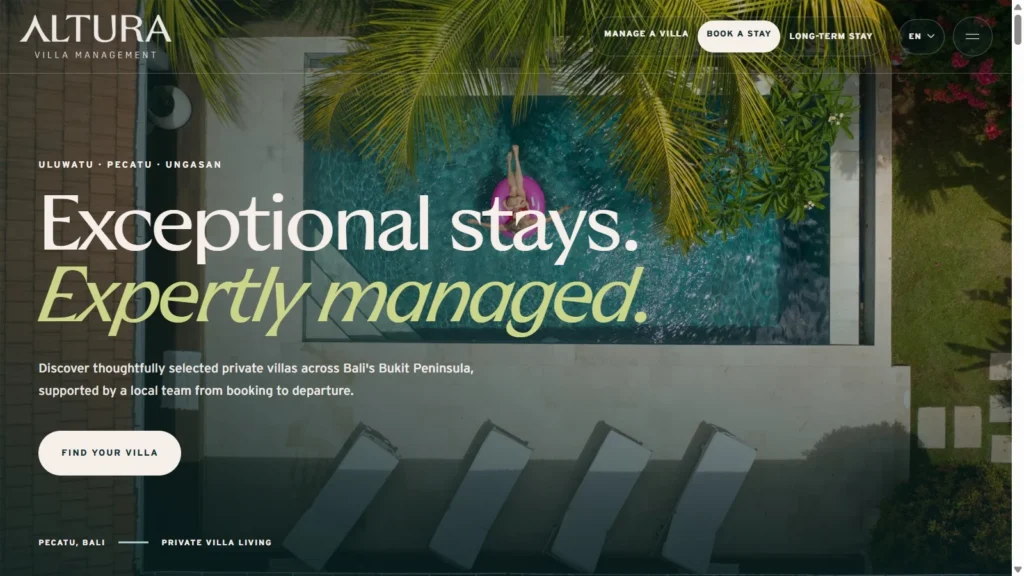
Altura Villa Management
A branded Hostaway Pro guest experience aligned with a separate Wix villa-management website.
 Web Development
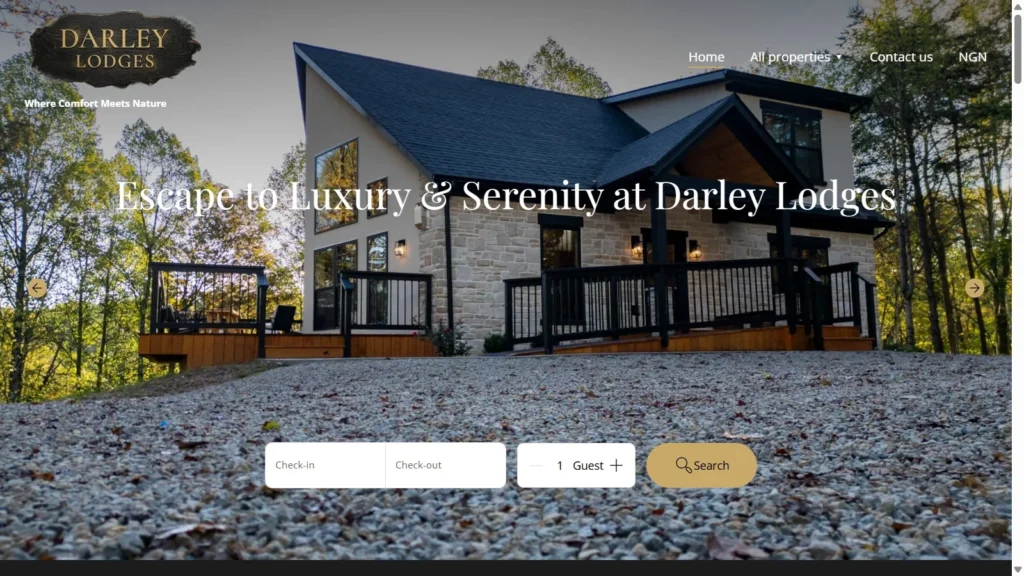
Darley Lodges
A two-property Lodgify redesign focused on distinct cabin presentation and clear direct-booking navigation.
 Web Development
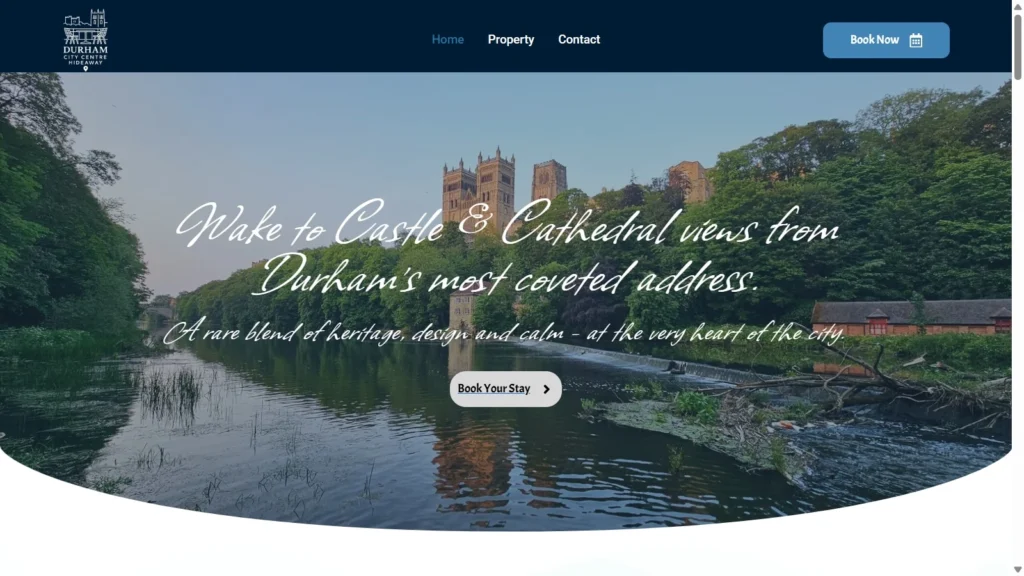
Durham City Centre Hideaway
A single-property website connecting accommodation storytelling, virtual-tour planning and a clear booking journey.