

RentHub Ghana — Custom WordPress Rental Marketplace
RentHub Ghana was conceived as a rental discovery and property-listing marketplace rather than a website for one accommodation owner.
Project overview.
RentHub Ghana was conceived as a rental discovery and property-listing marketplace rather than a website for one accommodation owner. Its ambition was to connect people seeking rental accommodation with property owners and agents across Ghana. The project required a more complex structure than a conventional real estate homepage: visitor search, individual listings and different account roles all had to be considered. The platform’s location coverage was designed around Ghana’s 16 regions, and early content included approximately 10 demonstration listings. Those figures describe initial platform coverage and seeded examples, not verified market adoption.
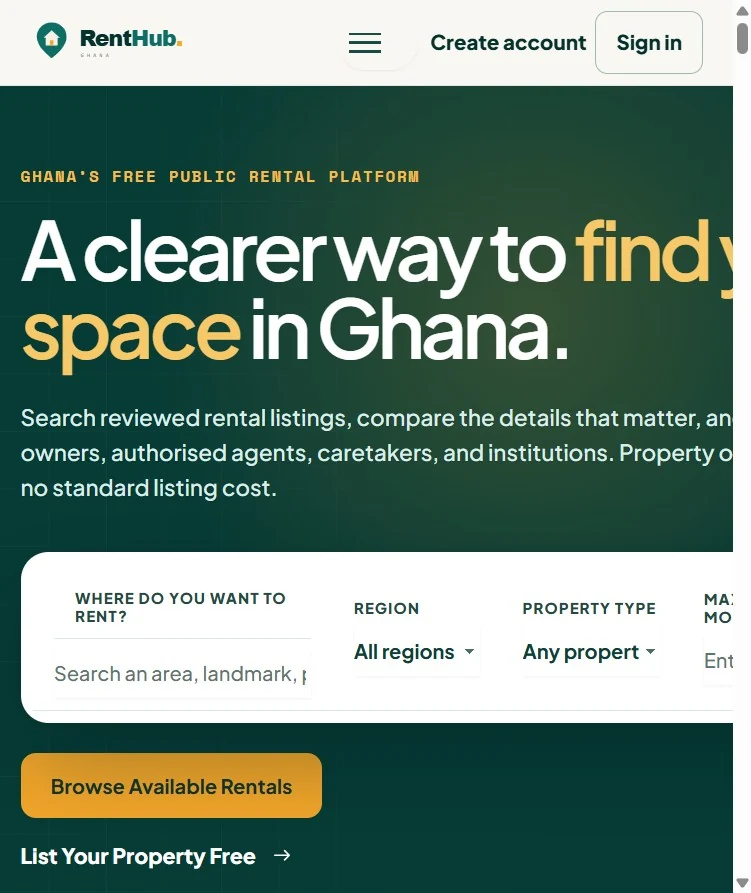
A Ghana-wide rental marketplace has different requirements from a single-property site. Renters need browse and search tools; landlords and agents need ways to submit information; administrators need moderation and account controls. Those journeys must operate within a coherent property data model.
What needed to change.
The ambition to cover Ghana's 16 regions required a usable location taxonomy. Regional navigation can organize discovery, but it is not evidence that genuine properties or active users already exist in every region. The early sample listings were demonstration material.
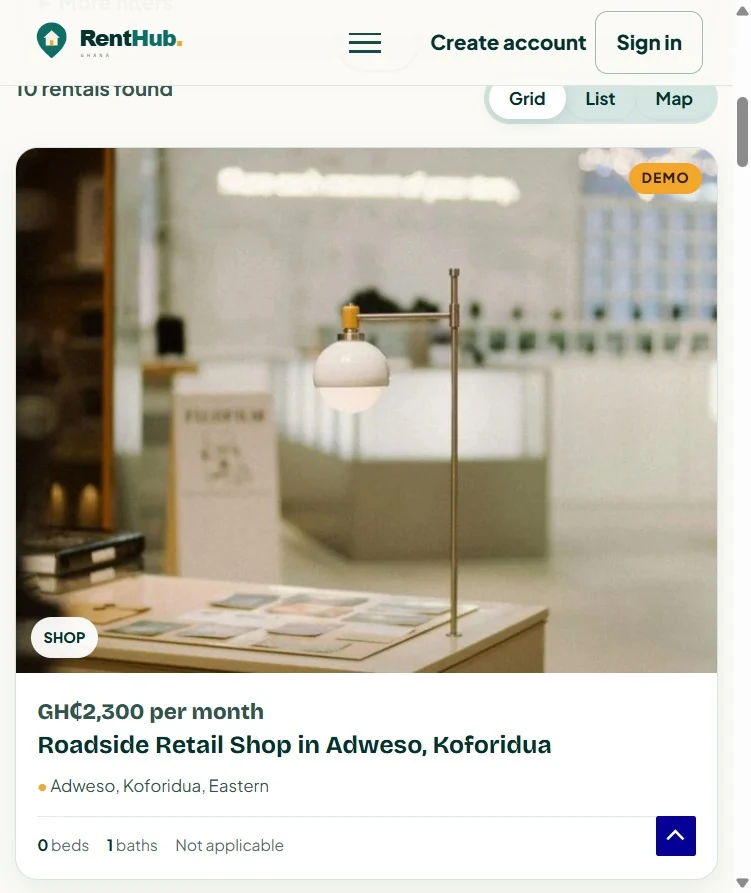
About ten seeded listings helped demonstrate card layouts and detail information while real inventory was still to be obtained. They should never be converted into claims of verified live stock.
A connected solution.
We structured the WordPress implementation around property categories, location-aware listings, detail pages and membership responsibilities. The intended account model differentiated property seekers from listing publishers and administration functions, with appropriate review and enquiry routes. An owner guide and policy material supported the handover. The next verification question was operational: whether registration, administrator access and email notifications were functional for real users, rather than merely whether the marketplace looked complete. Technology stack: WordPress · Rental listing & membership workflows.
Implementation, step by step.
Establish the marketplace model
The site needed separate journeys for visitors searching for rental homes and users responsible for publishing property information. Those audiences have different permissions and calls to action; a marketplace should not treat them as interchangeable.
Build listing discovery and detail pages
The implementation included property categories, relevant location information, listing cards and detail views. Accurate rent, property features, locality and contact information are essential to helping users decide whether a listing deserves further enquiry.
Plan role-based account access
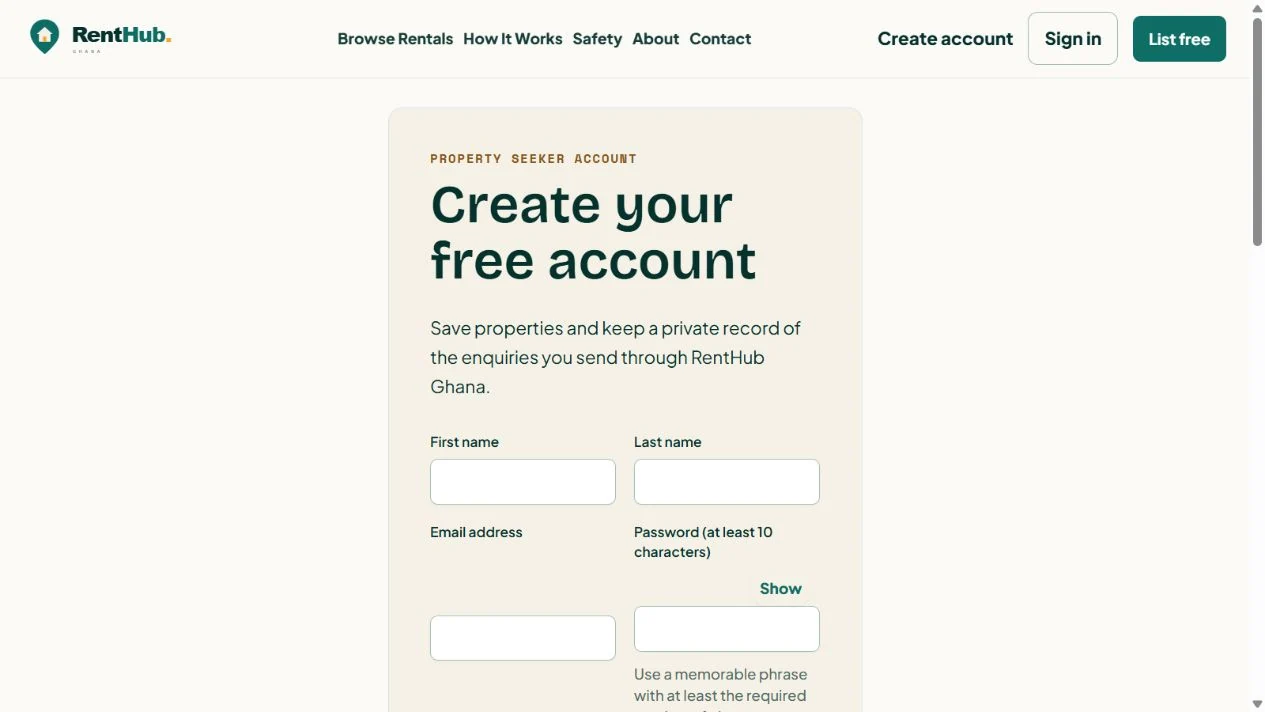
Registration and access requirements included different user roles. The technical work called for account flows and an administration process capable of reviewing or managing the marketplace. Such workflows also depend on dependable email delivery and authentication.
Provide starter content and regional structure
Demonstration listings were useful for showing how the platform would look before genuine third-party inventory accumulated. They must be clearly regarded as illustrative content unless converted to independently verified live listings.
Prepare site guidance and owner resources
The project archive references brand files, site policies and an owner/administrator guide. These are operational assets that support future handover, although they do not independently prove every admin function was working perfectly.
Address post-delivery concerns
The client later reported problems involving registration, administration login and SMTP-related behaviour. These are material issues for a marketplace.
Technical decisions, edge cases and validation
The property-discovery experience needed accurate rent, attributes, locality and contact information; incorrect example data can make a functional template look like an active market when it is not. Post-delivery reports of signup, admin-login and SMTP problems are part of the project's technical history. The archive does not conclusively demonstrate that every issue was repaired.
What We Delivered.
The initial marketplace build was delivered in July 2026. The documented project produced and delivered a custom WordPress rental marketplace engagement with regional navigation, demonstration listings and user/account requirements. The archive does not establish successful production operation of every sign-up or admin workflow, .
Technical lessons for comparable projects: Separate renter, publisher and administrator permissions rather than treating everyone as one WordPress user role.
Use real region taxonomy for discovery without claiming active landlords in all regions.
Verify registration email and administrator login during acceptance, not only after visual handover.
Keep sample listings explicitly illustrative until their owners and availability are verified.
Project Highlights
- The rental-marketplace foundation was delivered; registration, administrator access and email delivery still require feature-level validation.
Frequently Asked Questions.
Why is a rental marketplace harder than a property website?
It has multiple users, listings, submission rights, moderation and notifications.
Were the sample properties verified inventory?
No. The approximately ten seeded listings were demonstration content.
Why does SMTP matter?
Reliable account verification and notifications depend on mail delivery.
Does order completion prove every account flow works?
No. Post-delivery registration and administrator issues still require technical verification.
Planning a better hospitality website or booking workflow?
Tell us about your project and discuss the next steps with Superb Digitals.
Related client work.
 Web Development
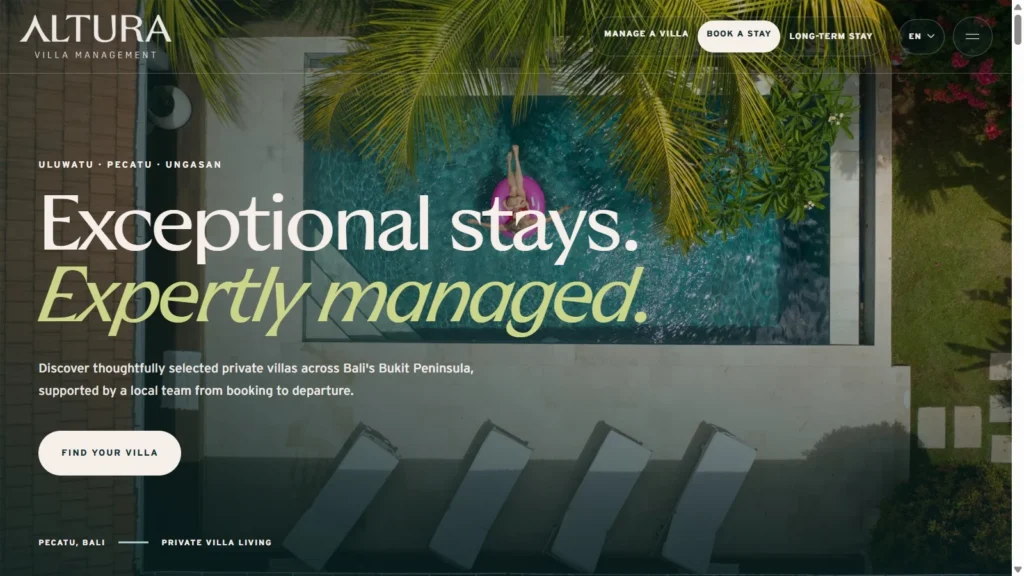
Altura Villa Management
A branded Hostaway Pro guest experience aligned with a separate Wix villa-management website.
 Web Development
Darley Lodges
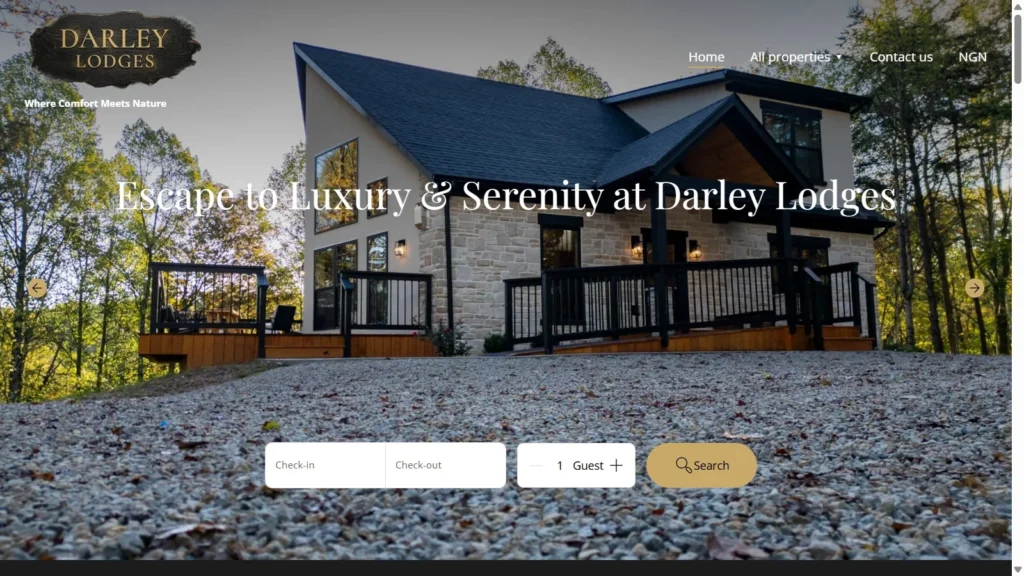
A two-property Lodgify redesign focused on distinct cabin presentation and clear direct-booking navigation.
 Web Development
Durham City Centre Hideaway
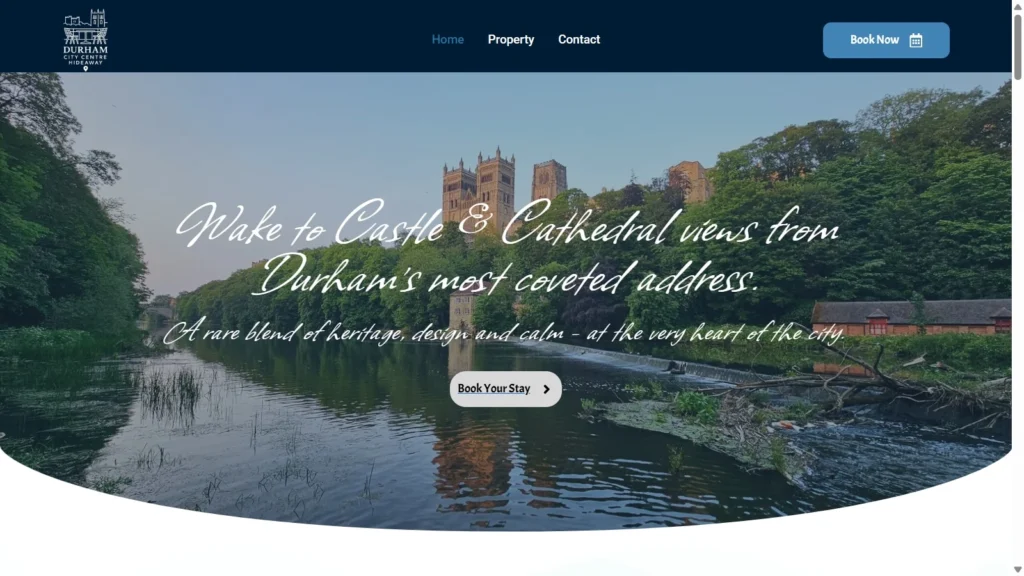
A single-property website connecting accommodation storytelling, virtual-tour planning and a clear booking journey.