

Simple Stays UK — Elementor Service-Area Accommodation Landing Pages
Simple Stays provided furnished accommodation for contractors, corporate visitors, extended stays, emergency needs and relocation.
Project overview.
Simple Stays provided furnished accommodation for contractors, corporate visitors, extended stays, emergency needs and relocation. The website already had accommodation listings, a search area and enquiry routes. The missing opportunity was content specifically organized around why different audiences needed accommodation and where they were looking. The project developed five Birmingham service landing pages and a wider plan combining five accommodation services with five UK locations: Birmingham, Wolverhampton, Lichfield, Solihull and Stoke-on-Trent. The aim was to create a structured search-focused content system, not duplicate the same generic page 25 times.
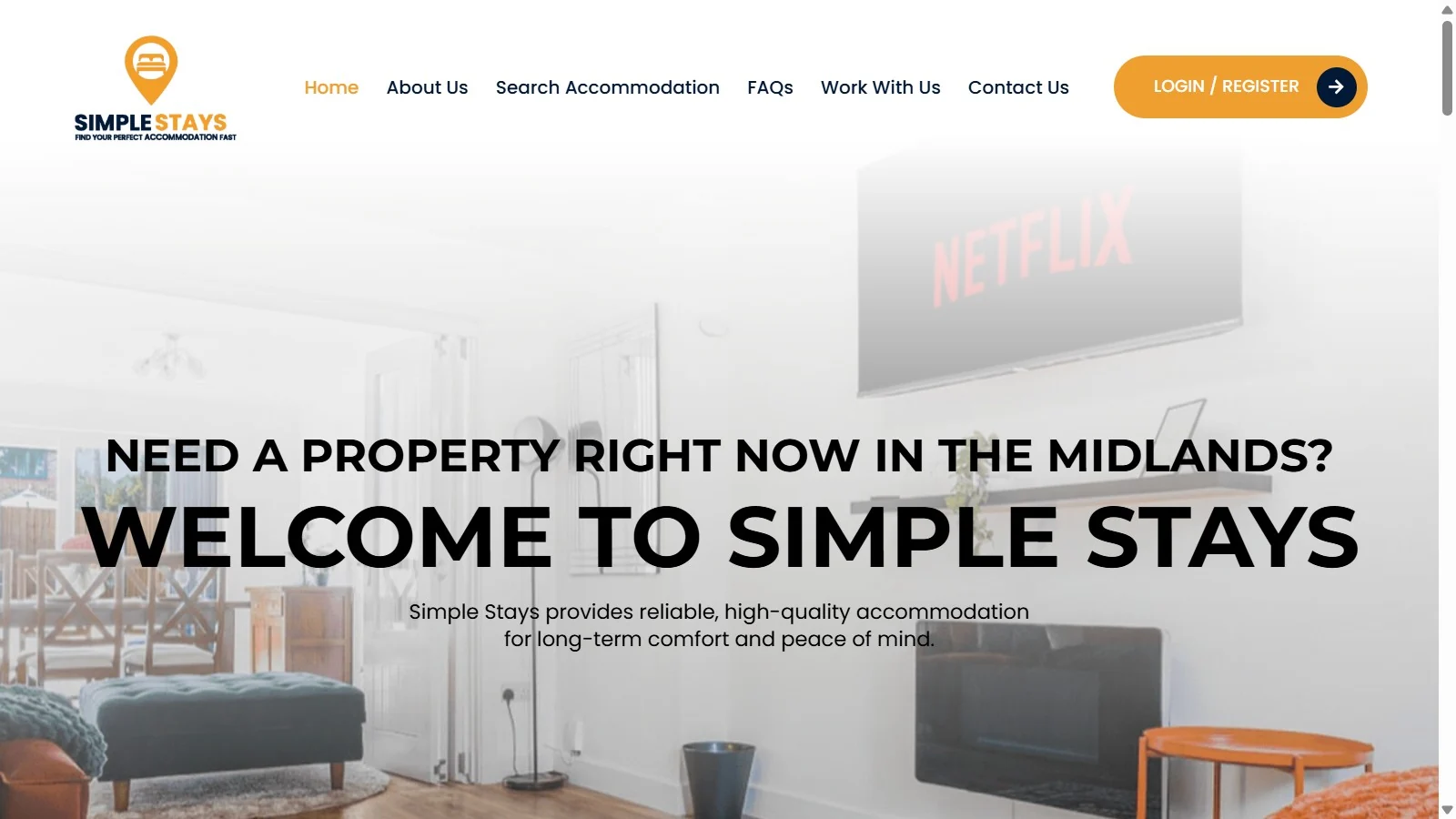
Simple Stays served multiple reasons for temporary furnished accommodation: construction contractors, corporate travellers, extended stays, insurance/emergency needs and relocation. A single generic accommodation page could not answer the different questions each visitor brought.
What needed to change.
The requested content architecture combined five service types with Birmingham, Wolverhampton, Lichfield, Solihull and Stoke-on-Trent. A 25-page plan is not proof of 25 completed, published or indexed pages; each city/service combination must have truthful local relevance and accurate property links.
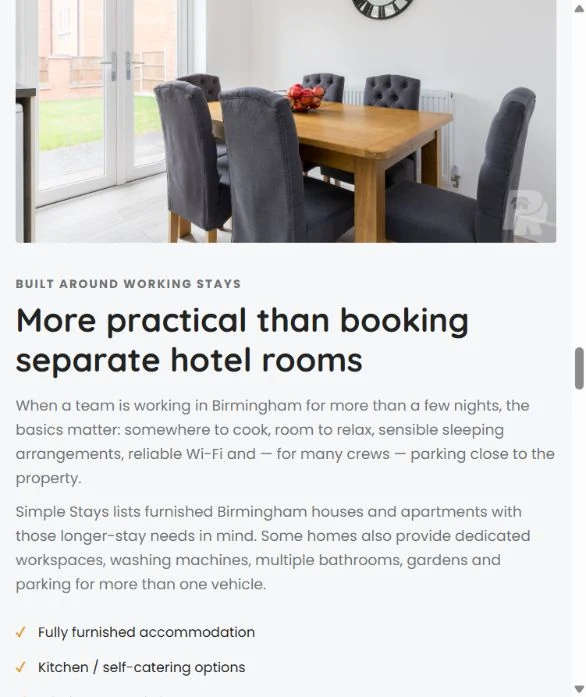
Contractor pages needed practical facilities and parking context; corporate pages focused on furnished work stays; emergency accommodation required cautious wording rather than guaranteeing insurer coverage.
A connected solution.
We prepared five detailed Birmingham landing-page implementations in Elementor-ready HTML/CSS, matching the existing WordPress header/footer and the site's dark-blue/orange visual language. Each page offered its own introductory copy, relevant accommodations, practical benefits, FAQs and next steps. The expanded location matrix was designed as a repeatable content structure, not a doorway-page generator. We used real listing references and distinguished direct booking/browse actions from more detailed enquiries for corporate teams or households with uncertain dates. Technology stack: WordPress · Elementor · Local SEO · JSON-LD.
Implementation, step by step.
Define distinct customer intentions
Contractors needed parking, separate sleeping space and practical facilities; corporate bookers cared about furnished work stays; relocators needed flexible temporary living; emergency enquiries required clarity without false claims about insurers or guaranteed availability.
Build five Birmingham templates
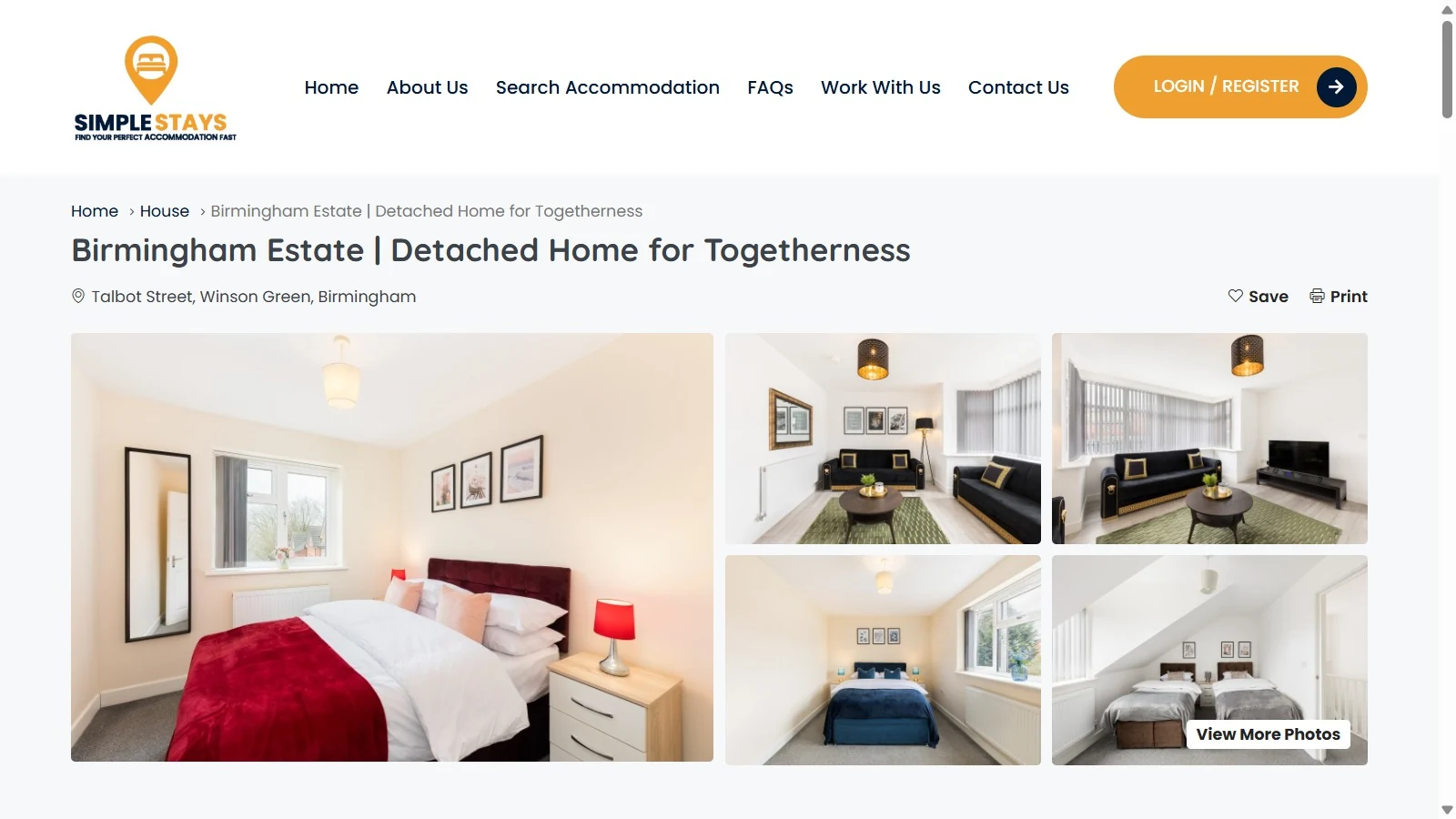
The prepared pages were Contractor Accommodation, Corporate Housing, Extended-Stay Accommodation, Insurance & Emergency Accommodation and Relocation Accommodation. Each featured a focused headline, relevant explanations, property cards, FAQ content and clear booking or enquiry routes.
Match the existing site
Elementor-ready sections used custom HTML/CSS intended for full-width pages while preserving the original WordPress header and footer. The design reused dark-blue and orange accents and adjusted grids and typography for desktop, tablet and mobile.
Use real listing references
The templates linked to actual Simple Stays property pages instead of inventing accommodation or using unrelated stock photos. One Hockley listing had inconsistent bedroom information, so the copy was written to avoid asserting an unconfirmed count and direct visitors to verify the details.
Separate book-now and enquiry pathways
Some visitors could browse live listings immediately; teams or households with uncertain dates needed to explain requirements. The pages therefore used both direct property links and contact actions instead of adding another redundant search widget.
Prepare page-specific SEO
Work included descriptive titles, slugs, meta descriptions, internal links and schema examples using WebPage, Service, LodgingBusiness and BreadcrumbList. The original files also contained FAQPage JSON-LD.
Plan a repeatable location architecture
The five service categories multiplied by five cities produced a 25- page content framework. Each live page would still need genuine local specificity and business coverage to avoid thin or doorway-like content.
Provide page-review assets
The archived implementation package included desktop/tablet/mobile preview controls and code export functions for the five Birmingham pages. The working files are direct evidence of page development, but not proof that all proposed URLs were launched and indexed.
Technical decisions, edge cases and validation
One Hockley listing contained inconsistent bedroom information. The content avoided asserting an unverified count and directed readers to confirm property details. SEO preparation included unique titles, slugs, internal links and applicable schema. Publication, indexability, current property accuracy and Search Console performance need separate checks.
What We Delivered.
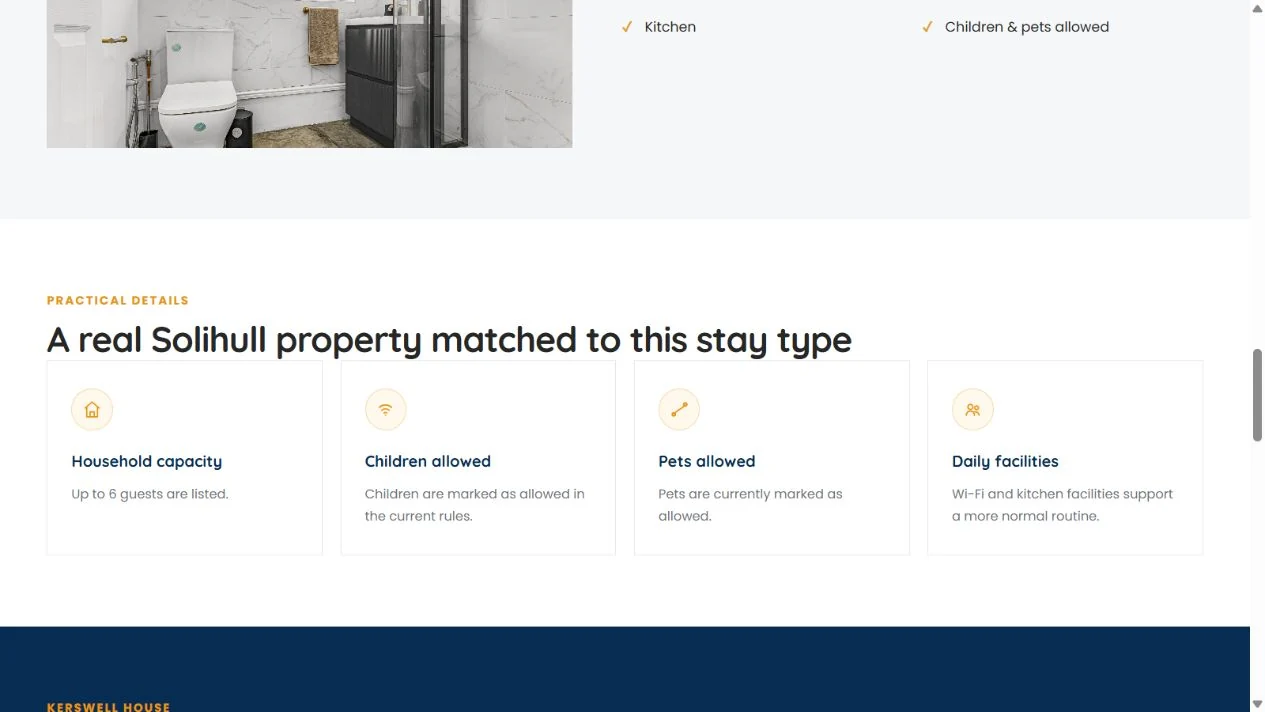
The original implementation files establish a substantial set of five Elementor-ready Birmingham pages and supporting SEO content. The wider architecture establishes the planned 25 service/location combinations. The record does not independently verify live publication or Google indexing for all 25 pages, or any particular rise in organic enquiries.
Five Birmingham pages prepared; broader 25-page plan is not evidence of 25 published pages.
Technical lessons for comparable projects: Service intent and city relevance must be distinct for each proposed location page.
Reuse visual components without duplicating the same thin text across twenty-five URLs.
Check real property descriptions before stating beds, bedrooms or availability.
Treat prepared Elementor copy separately from confirmed published pages and search performance.
Project Highlights
- Five Birmingham pages prepared; broader 25-page plan is not evidence of 25 published pages.
Frequently Asked Questions.
Were twenty-five pages confirmed published?
No. The archive documents five Birmingham builds and a broader 25-page plan.
Why write separate service-area pages?
Contractors, relocators and corporate guests have different accommodation requirements.
Can listing details be copied without checking?
No. Source inconsistencies, including room counts, need validation.
Does schema guarantee rich results?
No. Accurate visible content and actual eligibility remain necessary.
Need accommodation pages built for distinct guest needs?
Tell us about your project and discuss the next steps with Superb Digitals.
Related client work.
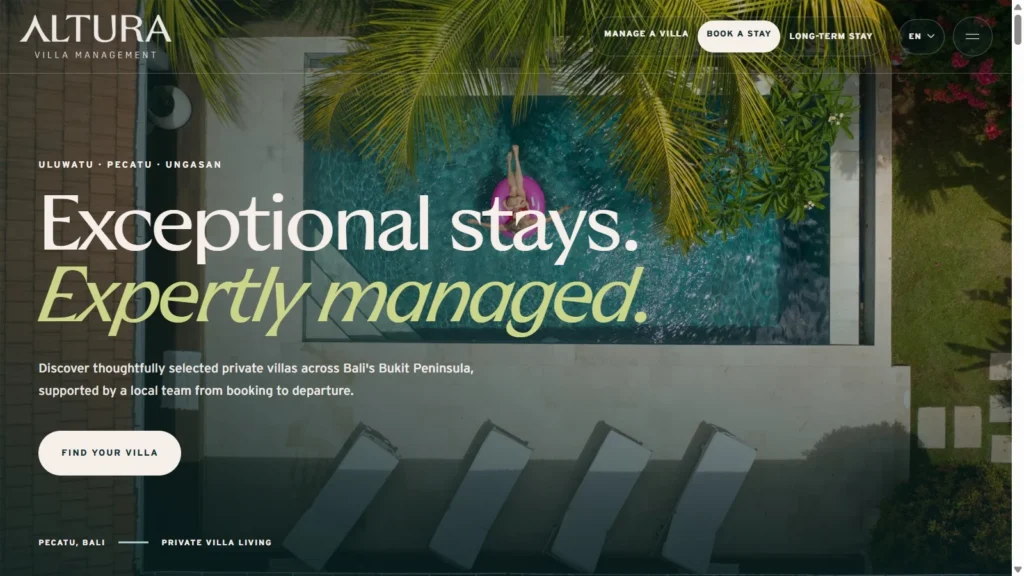 Web Development
Altura Villa Management
A branded Hostaway Pro guest experience aligned with a separate Wix villa-management website.
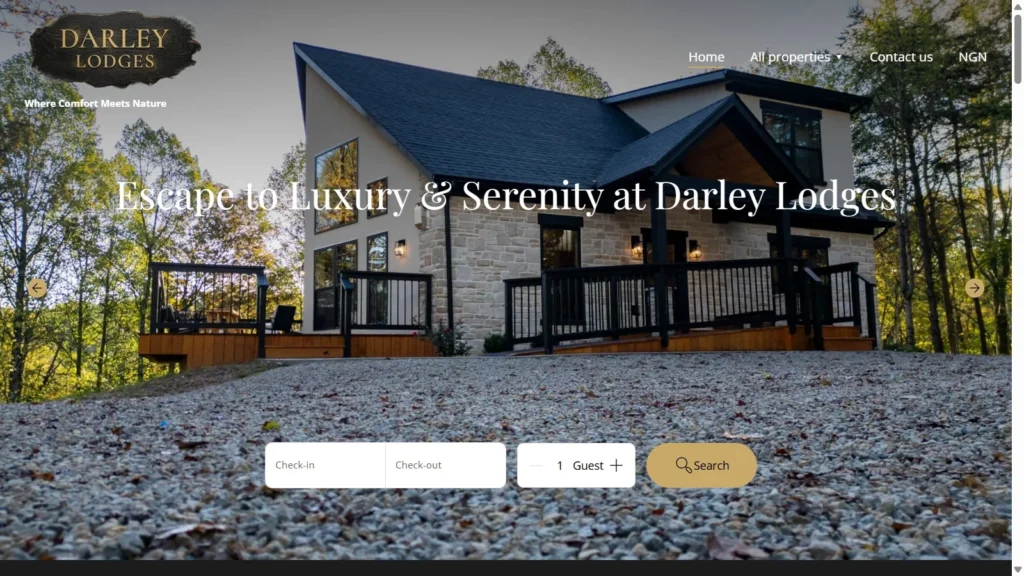 Web Development
Darley Lodges
A two-property Lodgify redesign focused on distinct cabin presentation and clear direct-booking navigation.
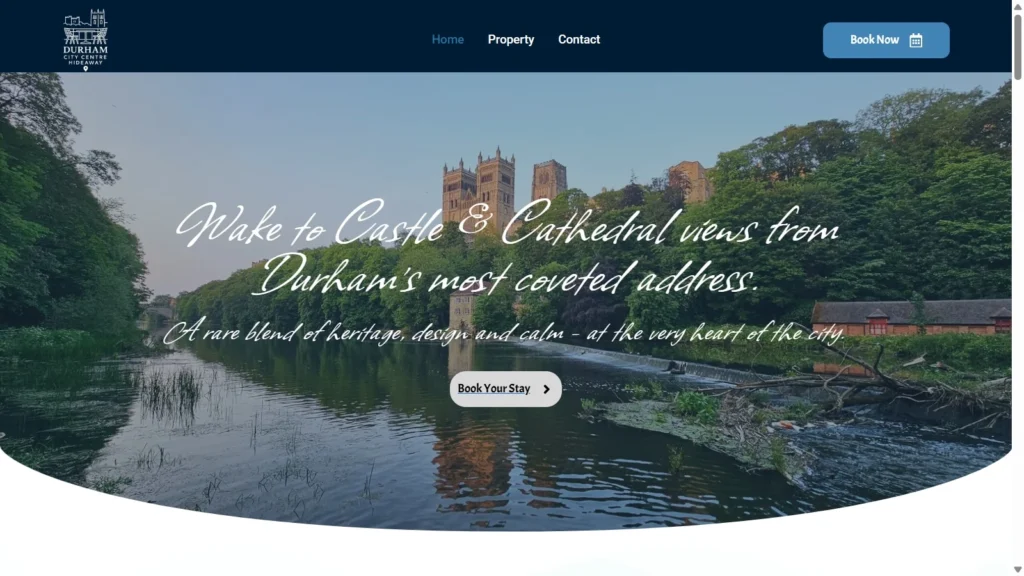 Web Development
Durham City Centre Hideaway
A single-property website connecting accommodation storytelling, virtual-tour planning and a clear booking journey.